Key Takeaways
- Natural factors like long dry seasons, lightning, and volcanic activity can trigger forest fires.
- Human activities, including land clearing and carelessness with fire sources, also increase the risk of forest fires.
- Climate change can worsen the conditions that support fires while also increasing the emissions they produce.
Forest fires can have wide-ranging impacts, from damaging habitats to reducing local air quality. That’s why understanding what causes forest fires matters, so you can be more aware of what could spark a fire.
Besides human factors, certain natural conditions can also increase the risk of forest fires. So, what causes forest fires? Find out in this article!
Causes of Forest Fire
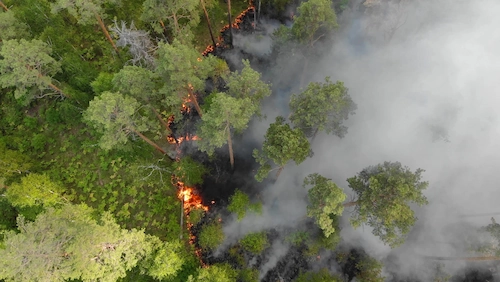
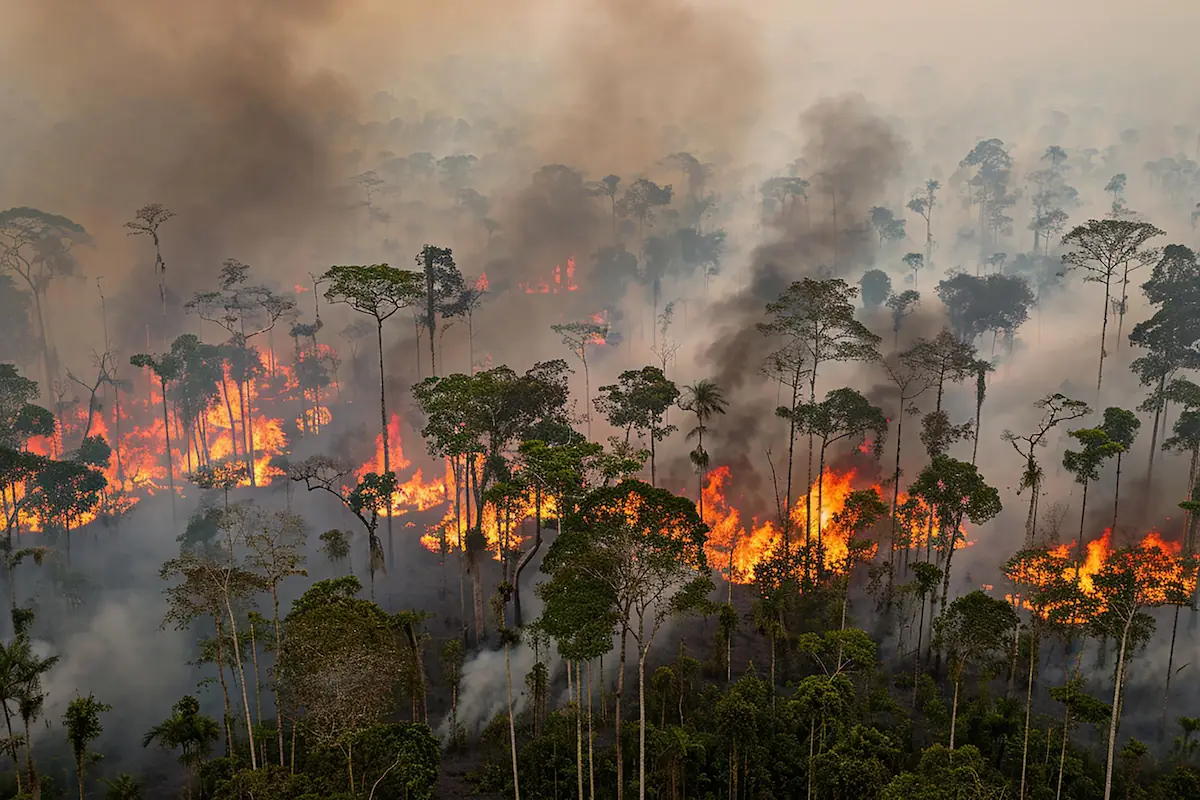
Forest and land fires (karhutla) remain an environmental issue that needs attention. Fires that start in a small area can spread quickly when vegetation is dry, winds are strong, and humidity is low.
Data from SiPongi+ of the Ministry of Forestry recorded that the area affected by karhutla in Indonesia reached 107,465.47 hectares in January–June 2026. This figure increased by 58,631.66 hectares (120%) from the same period in 2019, 56,383.94 hectares (110%) from 2023, and 84,387.70 hectares (366%) from 2025.
The data above shows that forest and land fires are a serious risk, especially when environmental conditions are dry, which can make fires spread faster.
However, forest fires don’t always happen because of just one factor. Causes of forest fire fall into two categories, namely natural and human. You can check out a more detailed explanation in the following list of forest fire causes:
Natural Causes
In general, forest fires can be triggered by several natural factors, including environmental conditions and natural phenomena. Here are some of the causes:
Long Dry Season
A long dry season reduces rainfall and dries out the environment. Vegetation, dry leaves, twigs, and the top layer of soil can lose a lot of their moisture, making them more flammable. This condition also lets fires spread faster when an ignition source is nearby.
Lightning Strikes
Lightning can start fires when it hits trees, shrubs, or dry vegetation. The heat from a lightning strike may start a fire. If it is not put out quickly, fire can spread to the surrounding forest areas.
Volcanic Activity
Volcanic activity can also trigger fires in the nearby forest areas. Lava, high-temperature volcanic material, or pyroclastic flows can burn the vegetation they pass through. This risk generally increases when hot materials reach areas with a lot of dry plants.
Ground Fire
Ground fire occurs beneath the ground surface and usually burns organic materials that accumulate within soil layers, such as roots and litter.
This condition can be found in areas with thick organic soil layers. The fire can slowly spread through these layers without producing visible surface flames, so it is often hard to detect.
You may also like: Deforestation: Causes, Effects, & How to Deal with It
Humans Causes
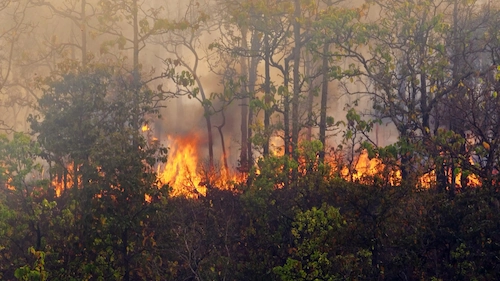
Various human activities can also start fires in forest areas. Causes can include land-clearing activities, recreation, or carelessness when using or discarding items that can catch fire. Here is the explanation:
Clearing Plantation Land
Clearing land with fire can spread to surrounding vegetation if not properly controlled. Dry weather and strong winds can make the fire spread faster.
Criminal Acts of Forest Burning
Deliberately setting forests on fire illegally can trigger wildfires. A fire intentionally started can spread into a larger blaze if environmental conditions support it.
Such actions can also impact the ecosystem, air quality, and nearby communities. Even native wildlife can lose their homes or be burned to death.
Campfire While Camping
Campfires used while camping can start a wildfire if the embers or fire are not completely put out. Still-glowing embers can be blown by the wind onto nearby grass, leaves, or dry twigs. The risk is even higher when you build a campfire in areas with easily flammable vegetation.
Using Fireworks
Fireworks produce sparks and hot material that can easily ignite dry vegetation. Using them near forest areas can increase fire risk, especially during hot and dry weather. Wind-carried sparks can also reach areas far from where they were set off.
Carelessly Throwing Cigarette Butts
Cigarette butts that still have embers can start a fire if thrown carelessly in areas with dry vegetation. Embers can ignite leaves, grass, or twigs that catch fire easily, and the fire can spread to the surrounding forest.
Related posts: 10 Benefits of Protected Forests for All Living Creatures
Are Forest Fires Related to Climate Change?
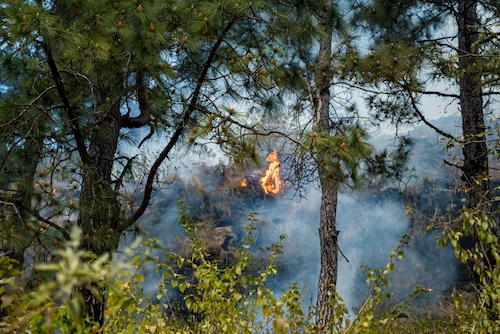
Climate change is not the direct cause of every forest fire, but changing climate conditions can increase the likelihood of fires happening.
Rising temperatures and shifting rainfall patterns can lengthen dry seasons, drying vegetation faster and making it easier to burn.
When a fire source appears in these conditions, the dry vegetation can act as fuel and help the fire spread more quickly.
The impact doesn’t stop at forest damage. Fires also release carbon stored in vegetation and soil into the atmosphere as greenhouse gas emissions.
This shows a reciprocal relationship between climate change and forest fires. Climate change can create conditions that are more vulnerable to fires.
In the end, large-scale fires also add emissions that contribute to global warming.
Together with #AksiAsri, Let’s Take Small Steps to Preserve the Earth!
Knowing the causes of forest fires is a first step toward raising awareness about protecting nature. However, caring for the environment also requires consistent action, both individually and as a community.
Taking care of forests and the environment is not just about preventing fires but also about building habits that are more responsible towards nature.
After understanding the different causes of forest fires, you can help protect the environment through actions you can do together.
Indonesia Asri offers various programs that give people a platform to contribute. One is #AksiAsri, which features a variety of activities to support the environment, from Operasi Semut, which educates people on sorting waste before throwing it away, to the EcoCircular Fellowship Program, a space for learning about the circular economy combined with interactive journalism classes.
So, taking care of the Earth does not have to start with big steps. You can start with simple actions today and be part of Indonesia Asri, supporting environmental sustainability.
So, register as Warga Asri and join various exciting actions at #AksiAsri to preserve the Earth!
Also worth reading: Top 5 Largest Forests in the World, from Taiga to Valdivian!
Frequently Asked Questions (FAQ)
Still have questions that have not been answered? Find quick answers to some common questions about environmental care and fires below:
1. What Are the Impacts of Forest Fires?
Fires can cause many effects, including breathing problems, haze, ecosystem damage, disrupted natural balance, air pollution, and soil erosion.
2. What Are Some Ways to Deal with Forest Fires?
Forest fires can be mitigated through prevention, extinguishing, and adaptation. These include managing vegetation so fires don’t spread, conducting patrols, preparing firefighting facilities and infrastructure, and adapting to changing forest conditions caused by fires (for example, not clearing land by burning it).
3. What Are the 3 Elements of Fire?
The three elements of fire are fuel, oxygen, and heat. Together, they form the fire triangle that allows flames to ignite and keep burning.