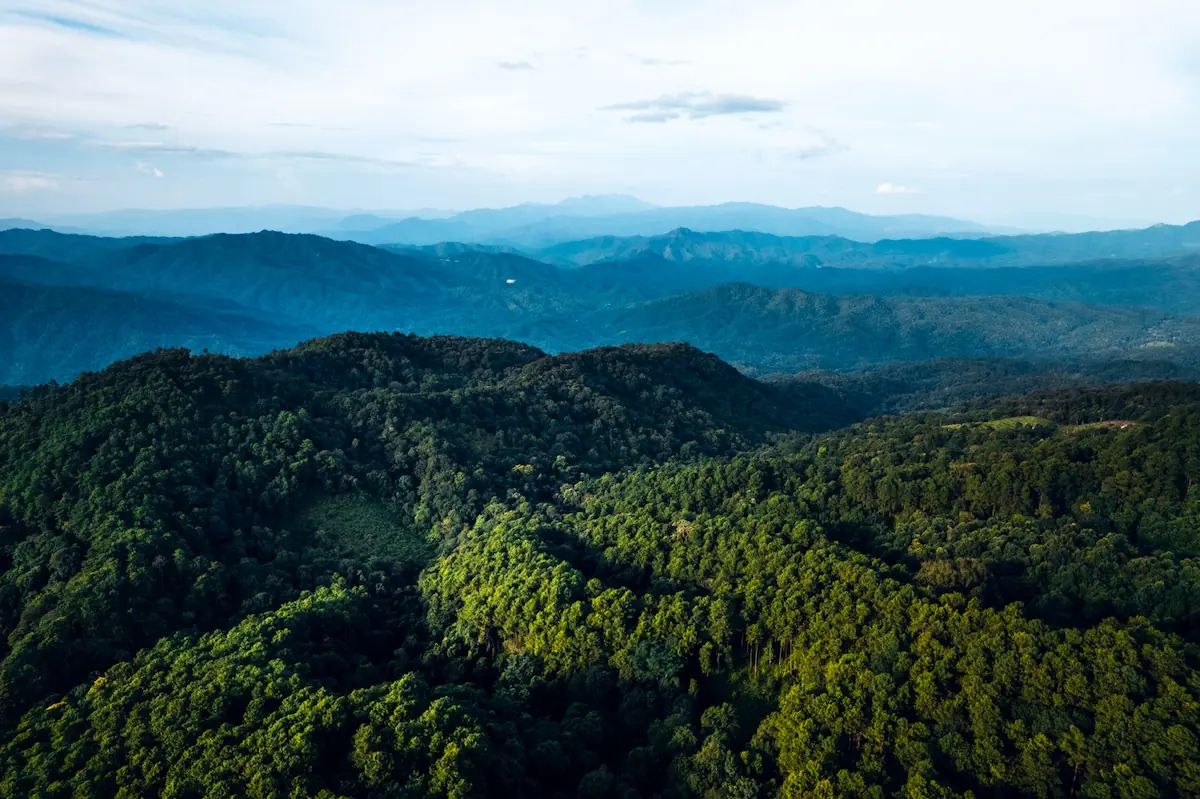
Forests are among the most important ecosystems on Earth, providing habitats for countless plant and animal species. However, their role goes far beyond providing a home for different species. Forests also help absorb carbon, regulate the water cycle, and help maintain the global climate balance.
On Earth, there are forest areas that stretch very far with amazing biodiversity. If you are curious about some of the largest forests in the world, check out the list below.
List of the Largest Forests in the World
Every forest area has different characteristics and landscapes, including differences in geographic size and biodiversity. These differences give every forest its own ecological significance and role.
As a note, the following list of the largest forests in the world is not ranked by size but by the scope of each area or ecoregion.
According to Discovery Channel UK, here are some of the largest forests in the world that you should know about:
Taiga (Boreal Forest)
Taiga, also known as the boreal forest, is one of the largest forest regions and the largest terrestrial biome in the world. This forest stretches across the Northern Hemisphere, covering parts of Russia, Canada, Alaska (USA), Norway, Sweden, and Finland.
The taiga biome is estimated to cover around 16.6 million km². Globally, boreal forests account for about 27% of the world’s total forest area, according to data from the United Nations Economic Commission for Europe (UNECE). Meanwhile, the fully tree-covered boreal forest area is about 7.6–7.7 million km² in Russia alone.
Boreal forest regions are generally located around 50–70° N latitude and have long winters and relatively short summers. These conditions make the taiga vegetation dominated by conifer trees, such as pines, firs, and spruces, which can adapt to extremely cold temperatures.
Besides being a habitat for various plants and animals, the taiga also stores a large amount of carbon. That’s why the existence of boreal forests helps support carbon balance and maintain ecosystem functions in the Earth’s northern regions.
More to Explore: 10 Benefits of Protected Forests for All Living Creatures
Amazon Rainforest
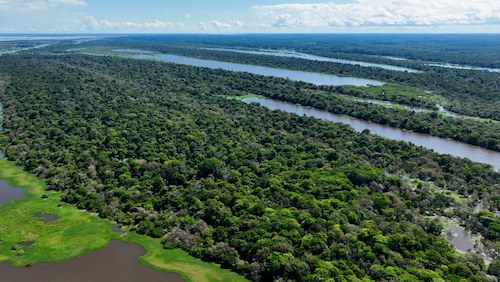
When it comes to the largest forests in the world, the Amazon Rainforest is certainly one of the areas most people are familiar with. It is the world’s largest tropical rainforest, spanning a vast area in South America.
The Amazon Rainforest covers approximately 6.7 million km² and spans nine countries. Most of it is in Brazil, while the rest extends into Peru, Colombia, Bolivia, Venezuela, Guyana, Suriname, Ecuador, and French Guiana.
It is not just its size that makes the Amazon special, but the Amazon Rainforest is also famous for its incredibly high biodiversity. The Amazon is home to about 10% of the world’s known species, including jaguars and anacondas.
Congo Rainforest
The Congo Rainforest is the second largest tropical rainforest in the world after the Amazon Rainforest. This area is located in Central Africa and stretches across six countries, namely Cameroon, the Central African Republic, the Democratic Republic of the Congo, the Republic of the Congo, Equatorial Guinea, and Gabon.
For example, the Congo Basin, which is home to the second-largest tropical rainforest in the world after the Amazon, covers about 3.7 million km². This area is home to more than 10,000 species of tropical plants, around 400 species of mammals, and over 700 species of fish, making it one of the areas with the highest biodiversity in the world.
New Guinea Rainforest
Did you know that the island of New Guinea is also home to one of the world’s largest tropical rainforests? The New Guinea Rainforest stretches across Papua New Guinea and Indonesia, with landscapes that include lowland and montane forests to coastal mangrove areas.
This region ranks third after the Amazon Rainforest and the Congo Rainforest, and it is also known as one of the tropical rainforests with an area of around 73 million hectares, or 730,000 km².
The uniqueness of the New Guinea Rainforest can also be seen in its biodiversity, which accounts for about 7% of the world’s species. This area is home to birds of paradise, tree kangaroos, cassowaries, and thousands of orchid species.
Explore More: Mangrove Ecotourism & 7 Must-Visit Destinations in Indonesia
Valdivian Forest
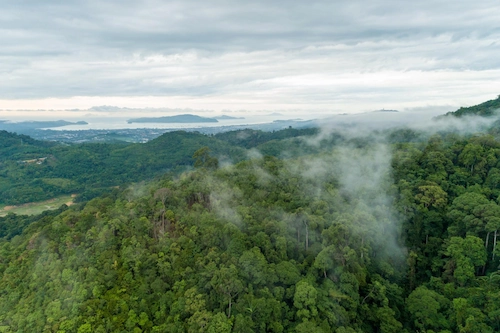
Unlike the tropical rainforests found in warm climate regions, the Valdivian forest is one of the world’s temperate rainforests. This forest is located in Chile and Argentina, covering an area of about 248,000 km².
The Valdivian forest is also known as one of the forests with the oldest trees in the world, including ancient trees that have been growing for thousands of years. One of them is the alerce tree, with some individuals estimated to live for more than 3,500 years.
Its cool and humid climate, with high rainfall influenced by winds from the Pacific Ocean, supports lush vegetation growth. These conditions make the area full of various plants, ranging from bamboo, ferns, and mosses to trees that are thousands of years old.
Protect Forests and Create a Greener Earth with #AksiAsri!
That brings us to the end of our look at some of the largest forests in the world, from their huge size and rich biodiversity to their role in maintaining ecosystem balance.
Remember, preserving and preventing deforestation is not only the government’s responsibility but also requires support from various parties, including us.
One step you can take is to adopt a sustainable lifestyle through everyday choices that are more environmentally friendly, like choosing eco-friendly fuel vehicles to support more sustainable mobility. While it may seem like a small step, every conscious choice can contribute to protecting our planet.
If you want to contribute further, you can also join the #AksiAsri initiative by Indonesia Asri. There are many interesting programs in #AksiAsri that you can participate in, ranging from Operasi Semut, which educates the public to learn to sort waste, to Jejak Asri Hobbies, a platform where you can pursue your hobbies while gaining a broader understanding of the benefits and responsible use of plastic.
Register yourself to become part of the Warga Asri community. Together, we can help create a greener and more sustainable environment through meaningful actions in Indonesia Asri!
Also Worth Reading: 12 Benefits of Mangrove Forests for Humans and Nature