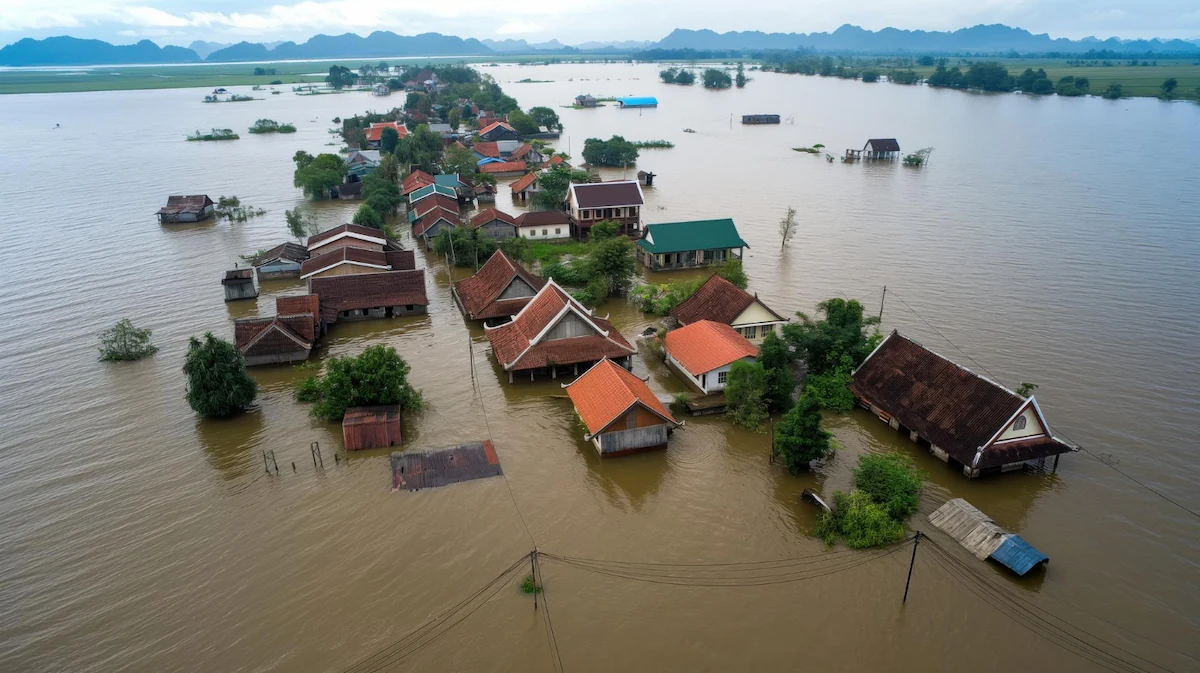
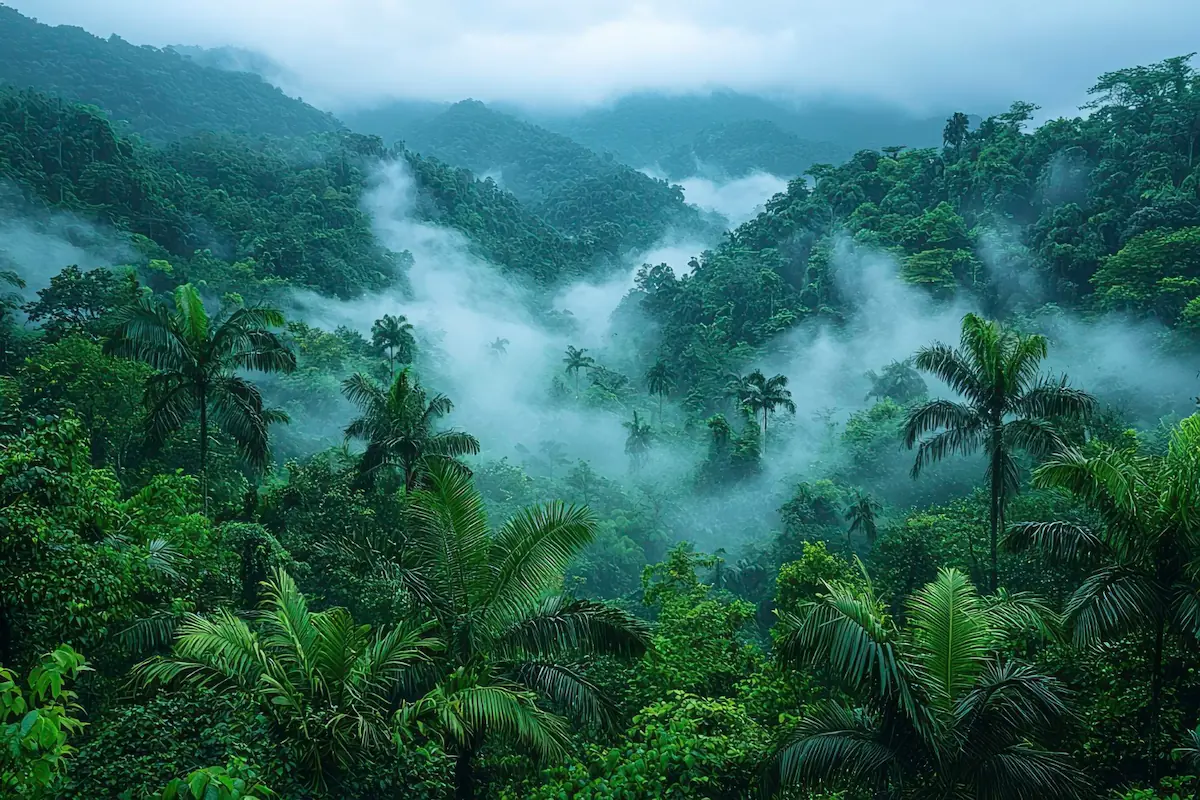
Tropical rainforests are one of the world’s most important ecosystems because they are home to extraordinary biodiversity. In addition to serving as habitats for millions of plant and animal species, these areas play a major role in maintaining Earth’s climate balance and water cycle.
Tropical rainforests provide numerous benefits for both the environment and human life. To better understand the functions, characteristics, and importance of tropical rainforests, read the full discussion in the following article.
What Is a Tropical Rainforest?
A tropical rainforest is a forest found in tropical regions, characterized by year-round rainfall, warm temperatures, and high humidity.
Most tropical rainforests are located around the equator at 23.5° north latitude (N) and 23.5° south latitude (S), including in Indonesia, Brazil, and several countries in Central Africa.
In Southeast Asia, most of the remaining tropical rainforests are currently found in Indonesia. Kalimantan is one example of a tropical rainforest in Indonesia, with forests estimated to be around 130 million years old. These forests serve as habitats for approximately 15,000 plant species, around 3,000 tree species, 221 species of terrestrial mammals, and at least 420 bird species.
History of Tropical Rainforests
Modern tropical rainforests are estimated to have begun developing around 100 million years ago during the Cretaceous Period. At that time, Earth’s climate was warmer and more humid, supporting the growth of flowering plants (angiosperms), which subsequently formed the first tropical rainforests and spread widely across various landmasses.
About 40 million years ago, in the middle of the Paleogene Period, a global climate change occurred that made Earth cooler and drier. This change caused parts of the tropical rainforests to transform into grasslands, savannas, and other vegetation types.
However, tropical rainforests persisted in regions near the equator that receive high rainfall year-round, such as Southeast Asia, South America, and Central Africa.
Read also: Ecological Pyramid: Types and Ecosystem Protection
Characteristics of Tropical Rainforests
What distinguishes tropical rainforests from other types of forests lies in their environmental conditions and biodiversity.
Tropical rainforests have very distinctive characteristics that make them easily recognizable. Here are some characteristics of tropical rainforests you should know:
High Rainfall Throughout the Year
Tropical rainforests are found in regions with very high rainfall intensity. Average annual rainfall in these ecosystems ranges from approximately 1,800 to 2,500 mm.
In fact, in some regions, it rains almost year-round without a long dry season. These conditions keep the forest environment constantly moist and are highly conducive to the growth of dense vegetation.
Highly Dense and Multi-Layered Vegetation
The vegetation of tropical rainforests is very dense and arranged in several tiered layers, ranging from tall trees in the uppermost layer, alongside shrubs and vines, to various epiphytes, such as orchids and ferns.
Contains Pools of Water
High rainfall throughout the year often results in standing water in some parts of the forest floor. These pools typically form when rainwater collects in depressions in the ground or in areas that serve as habitats for various small organisms.
Tall and Lush Trees
Another easily recognizable characteristic of tropical rainforests is the presence of very tall, lush trees. Many trees in this ecosystem can reach heights of over 30 meters, and some can even grow to 50 meters or more.
Rapid Regeneration After Damage
Another interesting characteristic of tropical rainforests is their ability to recover or regenerate after experiencing minor damage due to natural factors.
High rainfall, warm temperatures, and abundant sunlight allow new plants to grow relatively quickly in damaged areas.
Read also: Types of Trees That Play a Vital Role in Nature Conservation
Tropical Rainforest Ecosystem
Essentially, a tropical rainforest ecosystem consists of biotic components such as plants, animals, fungi, and microorganisms, as well as abiotic components such as soil, water, air, temperature, and sunlight. All of these elements work together to form a highly dynamic natural balance.
Within the tropical rainforest, there is a layered structure of life known as forest stratification. Each layer has distinct environmental characteristics, light levels, humidity, and types of organisms.
The topmost layer is the emergent layer, consisting of giant trees reaching heights of 50–60 meters. Trees in the emergent layer receive direct sunlight and serve as habitats for various species of birds, bats, butterflies, and insects.
Below this lies the canopy, a layer of intertwined tree crowns that forms the forest’s “roof.” The canopy is the heart of the tropical rainforest, as it is home to the majority of plant and animal species.
Beneath the canopy is the understory, which receives limited sunlight. Plants in this layer are generally 6 to over a dozen meters tall, with broad leaves designed to maximize light absorption. Various species of birds, reptiles, amphibians, and small mammals are also commonly found in this area.
Meanwhile, the forest floor is the lowest layer, which receives only a small amount of sunlight because it is blocked by the tree canopy above. Although it appears dark and damp, the forest floor serves as a vital habitat for decomposers such as fungi, bacteria, and insects, which help break down organic matter into nutrients for plants.
The existence of these layers creates a highly complex ecosystem and supports the high level of biodiversity in tropical rainforests. Each layer plays a vital role in maintaining ecological balance.
Benefits of Tropical Rainforests
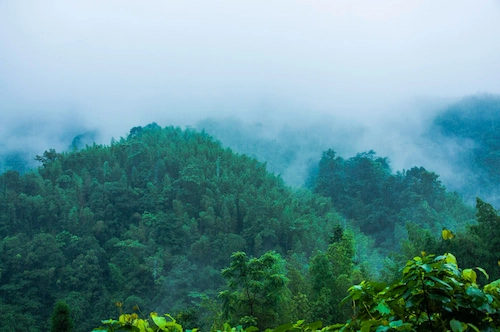
Tropical rainforests play a vital role in life on Earth. Below are some key benefits of tropical rainforests you should know:
- Absorbing carbon dioxide (CO₂) from the atmosphere.
- Producing oxygen through photosynthesis.
- Helping regulate the global climate.
- Serving as a habitat for millions of plant and animal species.
- Helping to reduce soil erosion and the risk of flooding.
That concludes the information on tropical rainforests, covering their definition, history, characteristics, and the various benefits they provide to life and the environment.
As one of the world’s most biologically diverse ecosystems, tropical rainforests play a vital role in maintaining the balance of nature, which we must work together to preserve.
If you want to contribute more to environmental conservation, Indonesia Asri can be the right platform to share your aspirations.
Through Indonesia Asri, you can become Warga Asri and join a community that cares about environmental sustainability.
Here, you can learn about various environmental issues, take part in activities that make a positive impact, connect with like-minded individuals, and participate in concrete actions to create a more sustainable environment.
Additionally, you can earn membership points that you can redeem for a variety of exciting merchandise.
Let’s make a positive change starting now with Indonesia Asri! Register now and join a generation that cares about the environment for a better future!
Read also: 12 Benefits of Mangrove Forest for Humans and Nature