Electricity plays an essential role in our daily lives, from lighting our homes to powering various electronic devices. To meet these needs, we require an energy source capable of generating electricity.
One widely used energy source is hydroelectric power. This technology utilizes water flow to generate electricity in a more environmentally friendly way.
To better understand how hydroelectric power plants work, their components, and their advantages and disadvantages, read the following article.
What Is a Hydroelectric Power Plant?
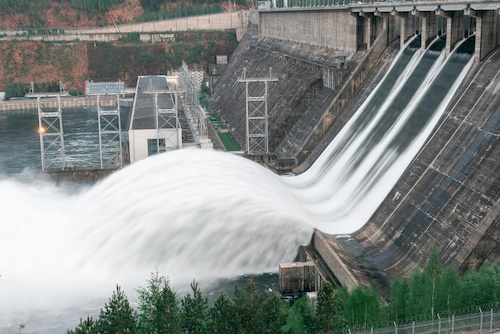
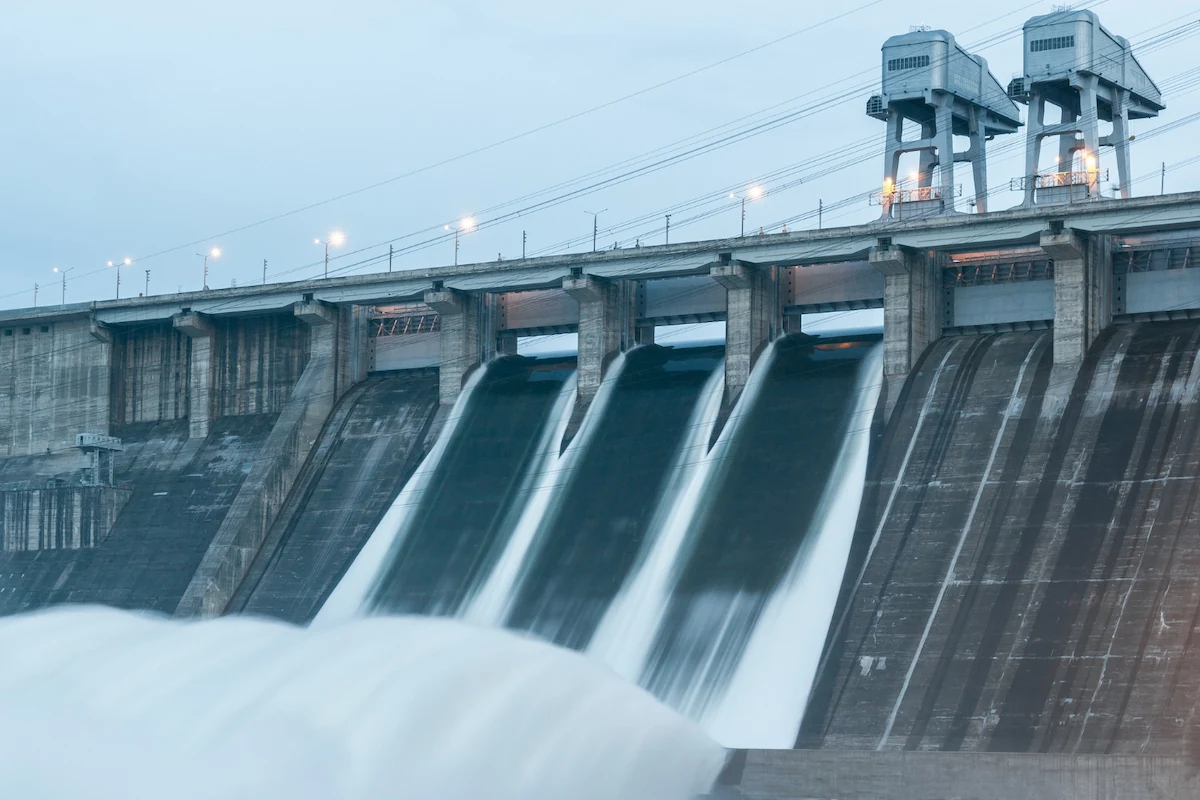
A hydroelectric power plant (HPP) is an electricity generation system that harnesses energy from flowing or falling water to produce electricity.
So, what role does water play in a hydroelectric power plant? Hydroelectric power plants serve as the primary energy source for turning turbines, thereby enabling electricity generation.
The kinetic (motion) energy of the water is converted into mechanical energy through the turbine, then converted into electrical energy by the generator. The electricity generated is then distributed to the power grid to meet the needs of households, industries, and public facilities.
Hydroelectric power plants are considered a form of renewable energy because they utilize the natural water cycle.
In addition to producing large amounts of electricity, these power plants are also known to be more environmentally friendly than fossil-fuel power plants because they have relatively low greenhouse gas emissions during operation.
The use of hydroelectric power plants in Indonesia continues to show positive growth. The Ministry of Energy and Mineral Resources notes that the total capacity of renewable energy power plants in Indonesia will reach 15,630 MW by 2025.
Of this total, hydropower is the largest energy source, with a capacity of approximately 7,587 MW. This figure represents an increase compared to 2024, when capacity stood at approximately 7,056 MW. This indicates that hydropower remains a mainstay in Indonesia’s renewable energy development.
Read also: 6 Examples of Alternative Energy & Its Projects in Indonesia
Components of a Hydroelectric Power Plant
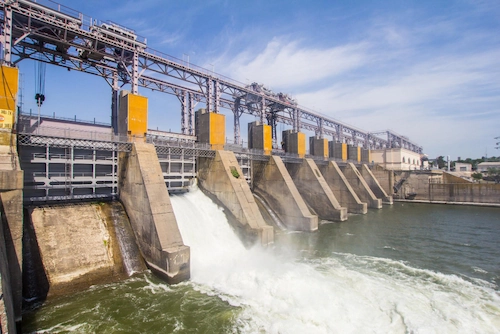
Before understanding how a hydroelectric power plant works, you need to know its components. Each component in a hydroelectric system plays a crucial role in converting water energy into electrical energy.
The main components of a hydroelectric power plant include:
- A dam or reservoir, which stores water and ensures a steady water supply for the plant.
- Penstock, which channels high-pressure water to the turbine.
- A turbine, which converts the kinetic energy of the water into mechanical energy through the rotation of its blades.
- A generator, which converts the mechanical energy from the turbine into electrical energy.
- Transformers, used to step up or adjust electrical voltage before distribution.
- Transmission lines carry electricity to homes, offices, industrial facilities, and various other locations.
How Hydroelectric Power Plants Work
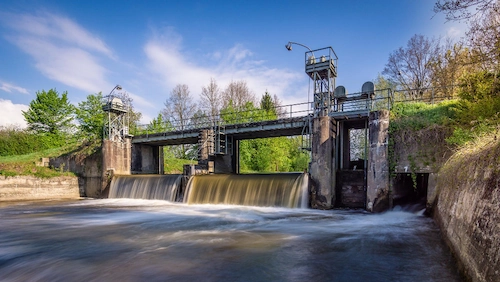
Now that we have covered the components, let’s take a look at how a hydroelectric power plant generates electricity. Although it involves various pieces of equipment, the process is actually quite simple.
The process begins when water stored in a dam or reservoir is channeled through a penstock toward the turbine. This high-pressure, high-velocity water flow spins the turbine blades, generating mechanical energy.
The turbine’s rotation is then transferred to the generator connected to it. At this stage, mechanical energy is converted into electrical energy through electromagnetic induction.
The electricity generated is then fed into a transformer to adjust the voltage for more efficient long-distance transmission.
After passing through the transformer, the electricity is distributed via transmission and distribution networks so it can be used by the people, whether at home, in schools, offices, or various other public facilities.
Advantages and Disadvantages of Hydroelectric Power Plants
Like any other technology, hydroelectric power plants have several advantages and disadvantages. Therefore, it is important to understand both sides of hydroelectric power plants as outlined below:
Advantages of Hydroelectric Power Plants
Do you know why many countries rely on hydroelectric power plants? One reason is that this technology offers the following benefits:
- Uses a renewable energy source that is naturally replenished.
- Produces relatively low carbon emissions.
- Able to generate large amounts of electricity.
- Has relatively low operating costs once it begins operation.
- Helps manage water resources through dams or reservoirs.
Read also: Waste-to-Energy Power Plants: Mechanism & Challenges
Disadvantages of Hydroelectric Power Plants
Although they have many advantages, hydroelectric power plants are nonetheless not without their disadvantages. Like other power generation technologies, hydroelectric power plants face several challenges that must be considered before they are built and operated.
To make it easier to understand, here are some of the disadvantages of hydroelectric power plants:
- Requires a significant initial construction cost.
- The location must have suitable geographical conditions and a reliable water source.
- Could potentially alter the ecosystem around the dam area.
- Plant performance can be affected by seasonal variations or changes in water flow.
- Requires a large area for the dam or reservoir.
- Can cause social impacts, such as the relocation of residents living near the project.
That concludes our discussion of hydroelectric power plants, covering everything from their definition and components to how they work and their advantages and disadvantages. As a renewable energy source, hydroelectric power plants play a vital role in supporting a more environmentally friendly and sustainable electricity supply.
If you are interested in contributing to environmental conservation, you can join Indonesia Asri as a Warga Asri.
By becoming Warga Asri, you can access a variety of environmental information, participate in diverse educational and inspiring activities, and connect with a community that shares your concern for the future of the Earth.
Let’s take concrete steps to create a greener, more sustainable environment together with Indonesia Asri. Become Warga Asri and register now to start contributing to positive environmental initiatives!
Read also: Micro Hydro Power Plant: Its Benefits and How It Works