

Table of Contents
The fashion industry in Indonesia is growing rapidly, but behind its success lies an equally significant environmental impact, and it is textile waste.
This growth is driven by the fast-fashion business model, which prioritizes mass-produced clothing sold quickly at low prices, aligning with the latest trends.
Although this helps manufacturers remain profitable amid rapidly changing trends, it still generates substantial textile waste.
Read this article to find out more about Indonesia’s textile waste problem and its impact on the environment.
Indonesia’s Textile Waste Problem
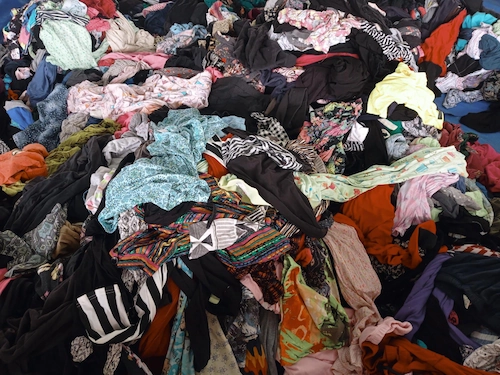
Indonesia’s textile waste problem is becoming increasingly severe due to the high consumption of fast fashion clothing. One of the biggest obstacles is the low recycling rate.
Data from the National Waste Management Information System indicate that textile waste in Indonesia accounts for around 2.63% of total waste.
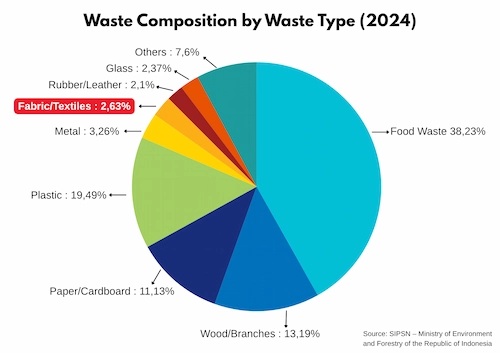
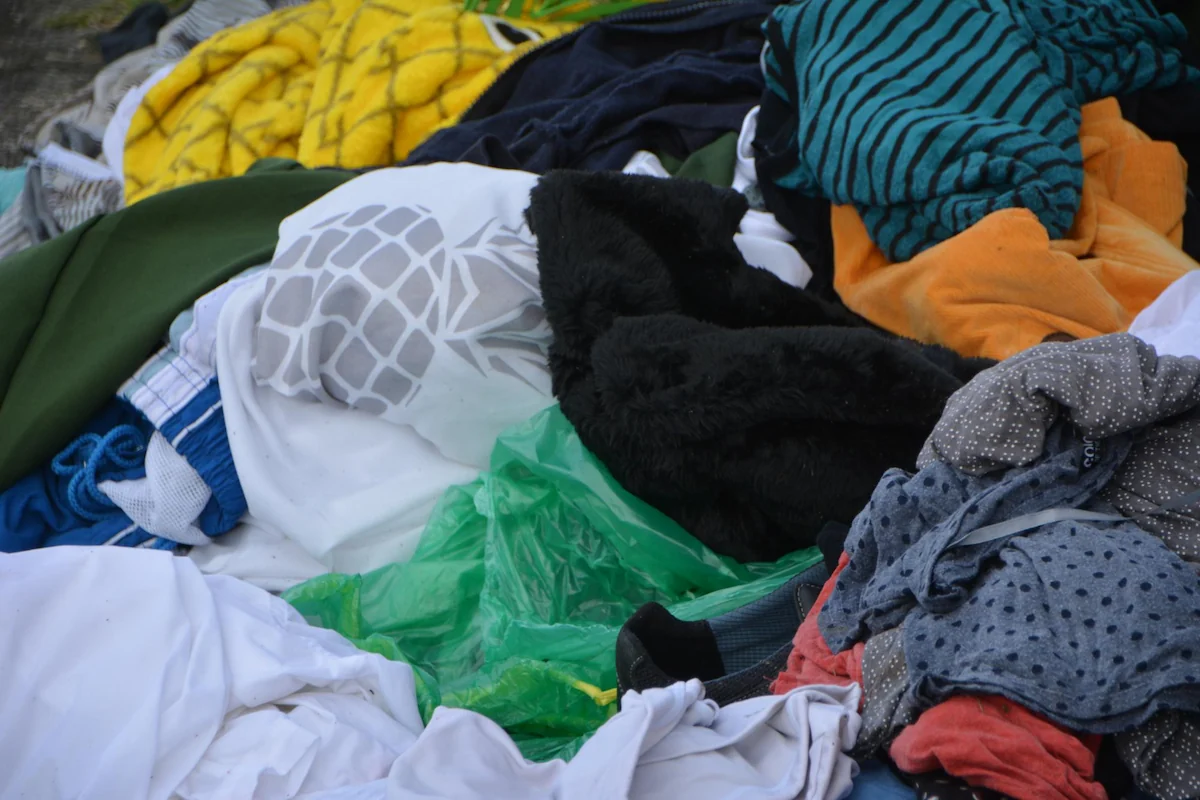
Although seemingly insignificant, textile waste has complex characteristics and long-term environmental impacts. Some examples of textile waste include fabric scraps, used clothing, and liquid waste from the dyeing process.
Many clothes are made from synthetic materials, making them difficult to recycle. Additionally, clothing packaging also adds to the pile of waste.
Textile companies must be aware of the environmental impact of their production and start building more environmentally friendly systems. One solution is technology to convert fabric waste into new products.
An environmentally friendly lifestyle also needs to be developed so that consumers are more aware and motivated to reduce textile waste from the source.
To mitigate the impact of textile waste, collaboration among the government, industry, and the community is necessary, along with adequate investment.
The Impact of Textile Waste on the Environment
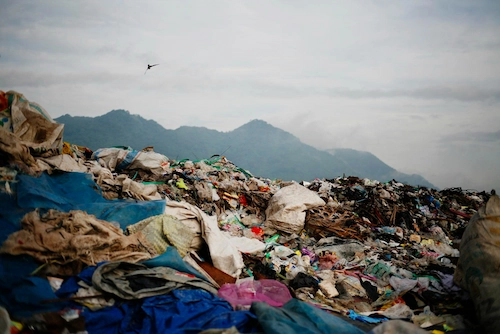
Textile waste from the production and use of clothing has a direct impact on the environment. The following are the main impacts:
1. Impact on Water Pollution
First, waste from the clothing industry is generally in liquid form and can enter rivers or the sea, potentially polluting water sources.
Many textile factories use synthetic materials, such as acrylic, nylon, and polyester, because they are durable and affordable. However, these materials take years to decompose.
Difficult-to-decompose waste will continue to accumulate. Pollutants from synthetic fabrics can spread to the oceans, disrupting the lives of fish, marine animals, and even the human food chain.
In the long term, the accumulation of textile waste can disrupt marine ecosystems and harm the environment.
Read also: Waste Oil: The Dangers, Impacts, and How to Take Care of It
2. Impact on Air Pollution
Not only does the production process generate waste, but so does unused clothing. Often, the most practical way to dispose of it is to burn it.
However, burning clothing releases harmful gases, such as CO2, CO, NOx, and SOx, as well as small particles that can harm both humans and the environment.
In addition, the pollutants formed spread into the air and have the potential to damage the respiratory systems and the health of living creatures.
3. Impact on Soil Pollution
Textile waste not only pollutes water and air, but also damages the soil. For example, textile wastewater in Boyolali in 2015 altered the color of rice fields, reduced fertility, and killed small animals, including worms and eels.
Proper waste management depends heavily on industry awareness, particularly when waste can be recycled to minimize its environmental impact.
How to Reduce Textile Waste
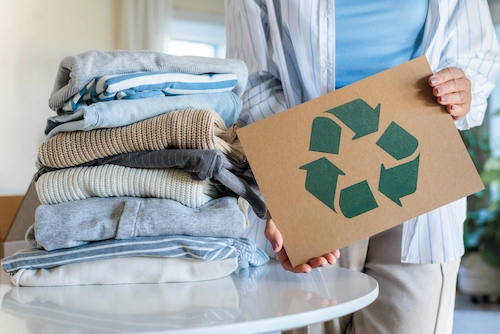
Fashion waste data in Indonesia indicates that mass production and fast-fashion trends generate significant amounts of textile waste.
Therefore, reducing textile waste is crucial to maintaining a healthy environment and producing sustainable products.
Several steps can be taken to manage this waste better, as explained below:
1. Identify Sources of Textile Production Waste
In garment factories, the majority of waste comes from fabric scraps. Inefficient cutting patterns often result in fabric being wasted.
The dyeing process also generates liquid waste containing chemicals, which can pollute the environment if not managed properly.
Additionally, overproduction is another problem. Unsold clothing piles up, but with more careful production planning, the production process can be more efficient and organized.
Read also: What Is Waste Disposal? Get to Know How to Do It Here!
2. Environmentally Friendly Technology in Textile Production
One way to reduce textile waste is to utilize environmentally friendly technology. Digital pattern cutting enables more efficient use of fabric, thereby reducing waste.
Waterless dyeing conserves water and reduces chemical waste, while fabric waste can be recycled into new materials.
3. Design Strategies to Minimize Textile Waste
Clothing design can help reduce textile waste. Zero-waste patterns utilize all the fabric so that nothing is wasted.
The modular fashion approach allows clothing parts to be replaced or repaired, making them more durable and flexible. 9
In this way, clothes can be worn longer and new production can be reduced, thereby reducing textile waste.
4. Reuse of Textile Waste
Textile waste can be reused to prevent it from being discarded. Fabric scraps can be turned into bags or accessories. Wearable clothing can be donated to communities in need.
5. Reducing Waste Through Better Production Management
Textile waste can be reduced if production management is better implemented. For example, by making clothes according to demand, overproduction and waste from unused products can be avoided.
In addition, choosing high-quality materials makes clothes more durable, so they do not need to be replaced often.
That concludes the explanation of the challenges of Indonesia’s textile waste problem and how to reduce it. By implementing steps, such as adopting environmentally friendly technologies, designing efficient clothing, promoting waste recycling, and improving production management, the textile industry can become more sustainable.
However, protecting the environment is not only the responsibility of the government or business entities. As an Indonesian citizen, you can also play an active role.
Some things you can do include sorting used clothing, donating wearable clothes, or supporting brands that practice sustainable production. This way, textile waste can be reduced, and ecosystems remain protected.
If you want to be part of positive change, join Indonesia Asri. As a Warga Asri, you can participate in various activities in the #AksiAsri campaign, including actions to reduce textile waste, recycle fabric, and support environmentally friendly production.
Register now and join us in realizing a cleaner, healthier, and more sustainable Indonesian environment!
Read also: How to Recycle Waste in 6 Easy Ways: Let’s Be Creative!