

Table of Contents
Indonesia is currently facing an increasingly serious waste issue. Every day, waste continues to grow along with population growth and the community’s consumptive lifestyle.
Many landfills in various regions are no longer able to accommodate the accumulating waste.
As a result, the environment is becoming polluted and public health is threatened. To find out more about Indonesia’s waste management issues and what can be done to manage them, read this article to the end.
Indonesia’s Waste Management Issues
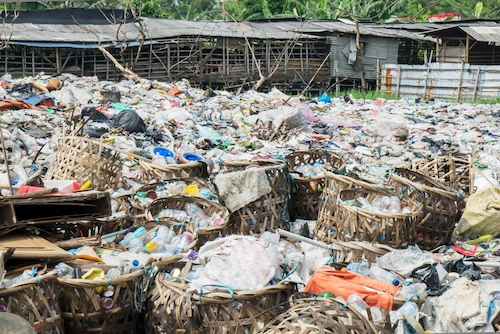
Data from the National Waste Management Information System in 2024 shows that Indonesia still faces significant problems in waste management.
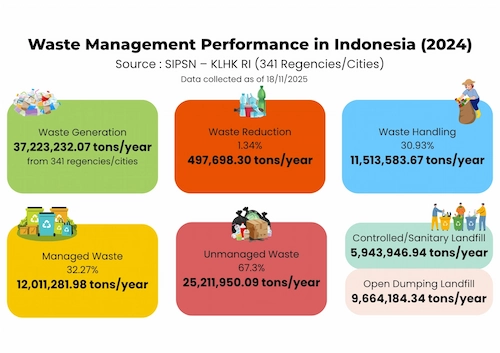
Waste generated by 341 districts and cities in Indonesia is estimated at around 37.2 million tons per year. However, only about 32.27% (12 million tons) of waste can be properly managed through collection, sorting, and recycling processes.
This low level of management is due to several factors, including limited facilities, limited public awareness, and uneven management systems across regions.
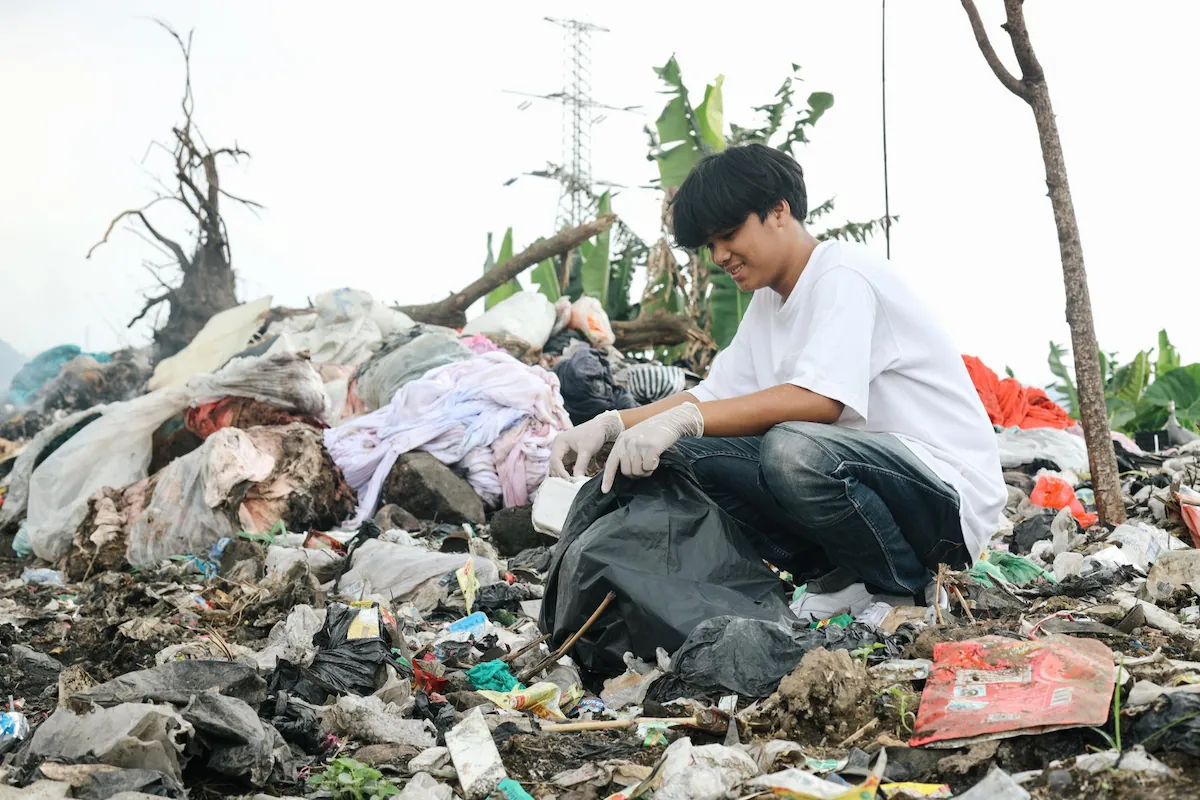
As a result, a lot of waste still piles up in the surrounding environment, causing various impacts, ranging from pollution to health problems.
The rate of waste reduction in Indonesia remains very low, at 1.36% of total waste generated. This figure shows that efforts to reduce waste at the source remain suboptimal.
Therefore, the community’s role is vital in helping reduce waste accumulation in Indonesia.
Some ways to manage waste issues in Indonesia include sorting organic and inorganic waste, reusing usable items, and avoiding disposable products.
Waste Management Conditions in Indonesia
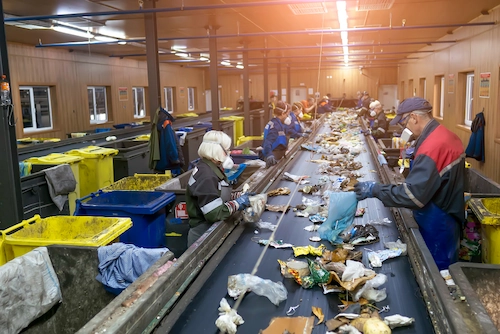
According to data from the National Waste Management Information System in 2024, around 67.7% of waste in Indonesia, or 24.9 million tons, was not adequately managed. Most of this waste is still disposed of in landfills without being handled in accordance with environmental standards.
Of all the waste that enters landfills, only about 5.9 million tons is handled in sanitary landfills, which bury waste under layers of soil to prevent environmental pollution.
Meanwhile, about 9.5 million tons are still disposed of by open dumping, which involves simply piling waste up without any special measures. This open disposal method can cause soil, groundwater, and air pollution.
Besides causing unpleasant odors, piles of garbage can also produce methane gas, which can exacerbate climate change.
This condition shows that waste management in Indonesia still needs a lot of improvement to be more environmentally friendly and sustainable, so that Indonesia’s waste problems in 2025 can be reduced.
Read also: What Is Waste Disposal? Get to Know How to Do It Here!
The Impact of Unmanaged Waste in Indonesia
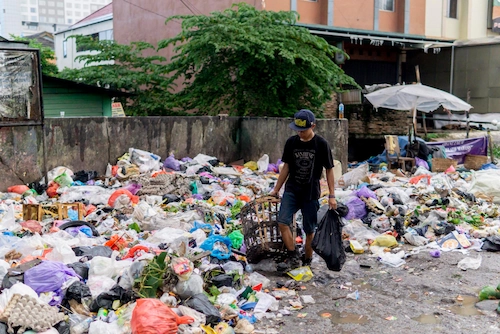
Improperly managed waste can cause various problems for the environment and humans.
Hazardous materials from waste can contaminate soil and water, damaging natural habitats and disrupting the balance of ecosystems.
When waste accumulates on roads or in gutters, it blocks water flow and causes flooding, especially during the rainy season.
On the other hand, waste that flows into the sea also poses a major threat to marine life. Animals such as fish, turtles, and seabirds can accidentally swallow waste.
In the long term, these waste particles will accumulate in the bodies of marine life. Ultimately, humans who consume seafood are also exposed, and this can harm their health.
Read also: Get to Know TPST, a Crucial Facility for the Environment
Things That Can Be Done to Address Indonesia’s Waste Management Issues
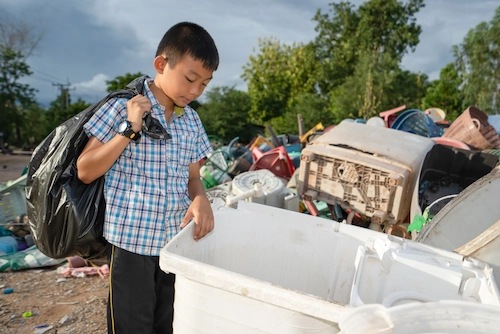
The government, business owners, and the community need to work together to create a cleaner environment. Here are some steps that can be taken to reduce waste accumulation in various regions:
- First, waste recycling and management facilities must be expanded. Collaboration between the government and the private sector is essential to ensure that each region has an adequate waste-sorting and processing system. That way, the volume of waste sent to landfills can be reduced.
- Second, public awareness campaigns and education must continue. The community needs to understand the impact of improperly managed waste. Environmental education in schools also plays a major role in instilling the habit of sorting and disposing of garbage properly from an early age.
- Third, the development of new technologies and ideas in waste management needs to be encouraged. For example, using waste as a source of energy or adopting more environmentally friendly processing methods.
From establishing clear policies to improving infrastructure, to high levels of community participation, efforts to manage waste in Indonesia can be practical.
These efforts not only maintain environmental cleanliness but also help create a healthier and more sustainable future for all.
That covers all the key points about Indonesia’s waste management issues and its solutions. This problem cannot be solved instantly, but taking small, consistent steps will bring about significant changes.
Keeping the environment clean is not only the responsibility of the government or business owners, but also of all of us.
You can start playing a role in tackling Indonesia’s waste problem with simple things, such as:
- Disposing of waste in its proper place.
- Sorting organic and inorganic waste.
- Supporting recycling activities in your neighborhood.
These small steps can contribute to the collective effort to reduce waste accumulation and keep the environment healthy.
If you want to directly contribute to solving Indonesia’s waste management issues, you can join Indonesia Asri.
As Warga Asri, you have the opportunity to participate in the #AksiAsri campaign through various real activities, ranging from cleaning up the environment and recycling waste to spreading education about the importance of sustainable waste management.
Register now and show your participation for a better Earth. Together with Indonesia Asri, create a cleaner, greener, and more livable Indonesia for future generations.
Read also: Learn the 7 Plastic Codes and How to Process Them Properly