

Table of Contents
A waste management system governs how waste is processed from collection to final disposal. This system encompasses processes ranging from sorting to disposal, all carried out safely. With a well-planned system, the negative impacts of waste on health and the environment can be minimized.
Then, what key aspects should be noted in a waste management system? Read the complete information below.
What Is a Waste Management System?
A waste management system is a series of processes that regulate how waste is reduced, sorted, reused, and disposed of safely. This system involves technologies, regulations, and management steps designed to minimize the environmental impacts of human activities.
Many countries adopt an integrated waste management model because of its effectiveness. Technological approaches to waste management include reducing waste at its source, sorting, recycling, composting, and energy recovery.
All these steps are governed by regulations that promote a circular economy and involve the government, businesses, and the community. With a structured system, each type of waste can be managed effectively and safely through its final stage.
Types of Waste Management Systems
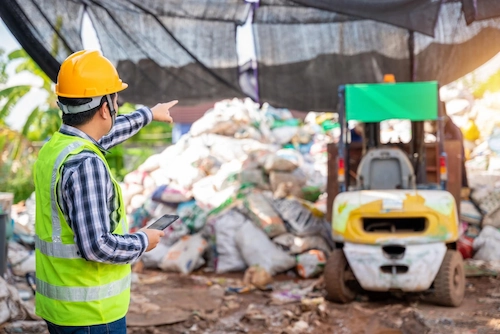
The final processing site determines long-term environmental quality. Currently, three types of systems are commonly used for waste management in Indonesia. Below are brief explanations of each:
1. Open Dumping
Open dumping is a system in which waste is piled in open land without any protective measures. This method can generate strong odors, methane gas, and groundwater contamination caused by leachate, thereby increasing health risks for nearby residents.
Because the waste is merely heaped without treatment, the volume of accumulated waste continues to grow, triggering numerous environmental problems. Consequently, the government has mandated all landfill sites to cease this practice, as stipulated in Law No. 18 Year 2008, Articles 44 and 45.
2. Controlled Landfill
A controlled landfill represents a transitional stage from open dumping to a sanitary landfill. In this system, waste is leveled, compacted, and then periodically covered with soil. This approach helps reduce odors, minimize methane emissions, and limit pest insect growth.
This type of system incurs higher operational costs than open dumping. For this reason, controlled landfills are often implemented in areas with limited financial resources, but that still aim to reduce environmental impacts.
3. Sanitary Landfill
A sanitary landfill manages waste by layering, compacting, and covering it with soil to maintain environmental safety. This system provides far better protection because it can control leachate and gas while preventing soil and water contamination.
Constructing a sanitary landfill requires substantial investment and sufficient land availability for cover material. In Indonesia, one facility that has implemented this system is the Talang Gulo Landfill in Jambi. China can also serve as an example, as it operates more than 600 sanitary landfills.
Read also: Differences between Waste and Garbage, Don’t Misunderstand!
General Stages of Waste Management
Waste management follows a series of sequential stages, each designed to ensure that waste is handled safely. The stages are as follows:
1. Sorting and Segregation at the Source
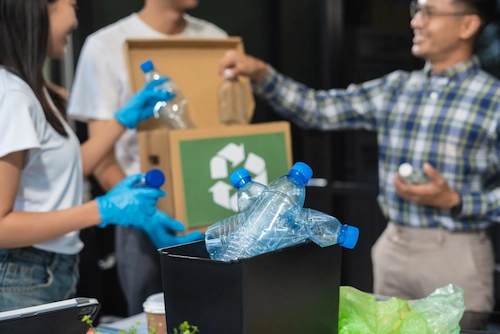
Sorting begins at the point where waste is generated—whether in households, industries, or commercial establishments. At this stage, waste must be separated into categories such as organic waste, recyclable materials, electronic waste, hazardous waste (B3), solid waste, and liquid waste to facilitate subsequent processing.
2. Collection and Transportation
Municipal sanitation services or private hauling companies then collect the sorted waste. After collection, the waste is transported to temporary storage sites (TPS), processing facilities, wastewater treatment installations, or final disposal locations.
3. Processing and Recovery
Waste management facilities use various technologies to separate, process, or convert waste into energy and new materials. The processes may include automated sorting, composting, mechanical recycling, or chemical recycling.
4. Recycle and Reuse
Materials such as paper, glass, and metals are reprocessed into raw materials. This step helps reduce waste volume while lowering demand for natural resources.
5. Final Disposal
Waste that cannot be further processed is disposed of in accordance with regulations. Final disposal options include sanitary landfills, incinerators with energy recovery, or hazardous waste storage.
6. Public Education and Awareness
An additional and essential stage is public education. These efforts aim to encourage the community to sort, reduce, and properly manage their waste independently.
While the use of the technologies mentioned earlier is indeed important, community behavior ultimately determines the overall success of the waste management system.
Read also: What Is Residual Waste? Properties and How to Process Them
Waste Management Methods
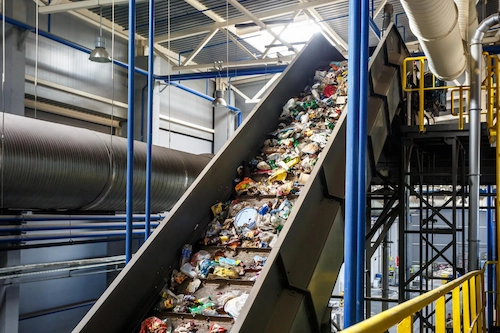
Various methods can be applied to ensure that waste is processed safely and does not harm the environment. Some of these methods include:
1. Composting
This method uses organic materials, such as food scraps and dried leaves, to produce nutrient-rich compost. The resulting compost can be reused to improve soil quality while reducing the volume of waste sent to landfills.
2. Waste-to-Energy (WTE)
This approach converts non-recyclable waste into energy. The process can produce heat, electricity, or fuel. Some of its main technologies include:
- Anaerobic digestion: The treatment of organic waste in oxygen-free conditions. This process produces methane-rich biogas that can be used as an energy source.
- Gasification: This process converts organic waste into synthesis gas (syngas). The resulting gas can be used as fuel for power generation or as a feedstock for chemical production. Its emissions are also lower than those of conventional combustion.
- Pyrolysis: The heating of waste at high temperatures in oxygen-free conditions. This process produces bio-oil, syngas, and char, all of which can be further utilized.
3. Bioremediation
Bioremediation uses microorganisms to reduce and neutralize hazardous waste. This method is therefore suitable for contaminated sites, as the process is more natural and environmentally safe.
Conditions and Challenges of Waste Management in Indonesia
In Indonesia, many landfill sites still operate like open dumping, posing significant pollution risks. Improvements in infrastructure and financing are needed to enable a transition to sanitary landfills.
Meanwhile, source sorting of waste remains uneven. Many people do not yet understand the importance of sorting waste and disposing of it responsibly.
Efforts in public education and regional regulations are therefore necessary to enhance recycling capabilities and reduce waste accumulation.
At the same time, the industrial sector is increasingly developing technology-based recycling initiatives to reduce waste volumes in landfills.
Then, is there a platform for individuals who want to support better waste management for a sustainable environment?
If you want to help create a cleaner and healthier environment, join Indonesia Asri. Through initiatives like #AksiAsri, Indonesia Asri encourages communities to adopt sustainable and eco-friendly habits.
So, what are you waiting for? Register now to become a Warga Asri and start making a real impact in protecting the Earth!
Read also: 7 Inorganic Waste Management Ideas, from Simple to Complex