
Environmentally friendly mobility is increasingly being discussed in various countries. One innovation that has attracted significant attention is the hydrogen car. These cars offer a new way to drive by utilizing cleaner energy.
Every transportation innovation has different characteristics, including hydrogen-powered cars. Let’s take a closer look at how they work, their advantages, and their potential through the following explanation!
What Is a Hydrogen Car?

A hydrogen car uses hydrogen gas as its primary energy source to generate electricity through fuel cell technology.
Unlike battery-powered electric cars that must be charged via an electrical outlet, hydrogen cars generate electricity directly through a reaction between hydrogen gas and oxygen inside the fuel cell. The electrical energy from this process is then transmitted to an electric motor, which serves as the vehicle’s primary propulsion system.
What makes hydrogen fuel cell technology so appealing is that the byproduct of this process is generally just water vapor. Since they produce no carbon dioxide (CO₂) emissions during operation, hydrogen cars are considered one of the more environmentally friendly transportation alternatives and potentially support efforts to reduce emissions in the transportation sector.
As clean energy innovations continue to advance, hydrogen cars are also being developed more extensively in various countries to complement battery-powered electric vehicles.
In Indonesia, hydrogen technology is beginning to gain attention as part of the national energy transition. The government, through the Ministry of Energy and Mineral Resources (ESDM), has launched the National Hydrogen and Ammonia Roadmap (Roadmap Hidrogen dan Amonia Nasional/RHAN), which serves as a guideline for hydrogen development, including its use in the transportation sector to support Indonesia’s net zero emissions (NZE) target for 2060.
Read also: 6 Types of Environmentally Friendly Fuels You Should Know About
How Hydrogen Cars Work
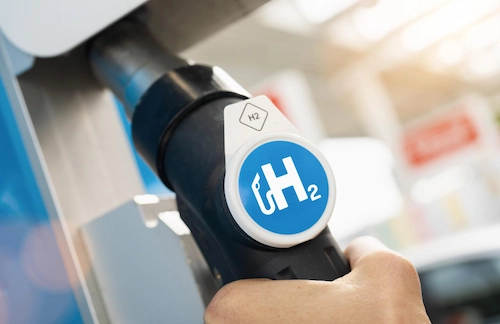
Although both use electric motors as their power source, hydrogen cars operate differently from battery-powered electric cars. In hydrogen-powered cars, fuel cell technology generates electricity directly in the vehicle, rather than using a battery charged with external electricity.
Here are the steps that explain how a hydrogen car works, which can help you understand it more easily:
1. Hydrogen Is Stored in a High-Pressure Tank
The process begins with hydrogen gas stored in a special high-pressure tank designed to keep the vehicle safe during operation. When the car starts, hydrogen is fed from the tank to the fuel cell system based on the vehicle’s energy needs.
2. The Fuel Cell Generates Electricity
Inside the fuel cell, hydrogen reacts with oxygen drawn from the air. This electrochemical reaction produces electrical energy to power the electric motor. In addition to generating electricity, the reaction also produces heat and water vapor as byproducts.
3. Electric Motors Power the Vehicle
The generated electricity then powers the electric motor. This motor turns the wheels, allowing the car to accelerate smoothly and operate more quietly than vehicles with internal combustion engines.
4. Additional Energy Stored in the Battery
In addition to using a fuel cell, most hydrogen-powered cars also have a small-capacity battery. This battery stores energy from the regenerative braking system and excess electricity from the fuel cell, so it can be reused when the vehicle needs additional power.
5. Emits Water Vapor
Once the fuel cell generates electrical energy, the reaction produces byproducts in the form of water and heat. The exhaust system then releases this water as water vapor or droplets.
Read also: Sustainable Transport: An Eco-Friendly Solution for the Future
Advantages and Disadvantages of Hydrogen Cars
Like other eco-friendly vehicles, hydrogen cars have several advantages and disadvantages to consider. By understanding both sides, you can get a more complete picture of the hydrogen car’s potential as a low-emission transportation solution for the future.
| Advantages of Hydrogen Cars | Disadvantages of Hydrogen Cars |
| Produces lower emissions during use because the byproduct is generally water vapor. | Hydrogen refueling station infrastructure is still limited. |
| Refueling time is relatively short, only about 3–5 minutes. | Vehicle and fuel cell technology costs remain relatively high. |
| Has a fairly long driving range on a single hydrogen refuel. | Producing, storing, and distributing hydrogen requires specialized technology to ensure safety and efficiency. |
| Uses an electric motor, which makes for a quieter ride. | Hydrogen-powered car models are still limited, so there are fewer options than for conventional fuel vehicles or battery-powered electric cars. |
Share Your Inspiring Story About Protecting the Environment with Jejak Asri!
Choosing vehicles with more environmentally friendly energy sources is one way to support a sustainable lifestyle as transportation technology advances.
Starting with small steps, using sustainable technology can make a positive impact while encouraging more people to care about the environment.
If you also have an inspiring experience practicing a sustainable lifestyle, don’t hesitate to share it with Indonesia Asri through our Jejak Asri program. Your story can inspire more people to work together to create a greener Indonesia.
In addition to inspiring more people, you also have the chance to win prizes worth millions of rupiah (terms and conditions apply) by participating in Jejak Asri. You can submit your story until October 16, 2026. Submit your story now and do not miss the chance to be part of the movement to create a greener Indonesia!
Read also: Understanding Eco-Friendly Technology and Its Benefits