
Technological advancements have brought many changes to our daily lives, from the way we work and communicate to how we use natural resources.
On the other hand, the growing number of environmental challenges has spurred innovations that not only simplify human activities but also help preserve the Earth. One such innovation is eco-friendly technology.
So, what exactly is eco-friendly technology? Want to know its definition, benefits, and how it is applied in daily life? Read this article to the end!
Definition of Eco-Friendly Technology
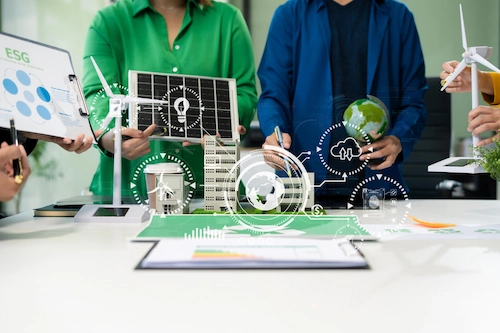
As times change, technology has evolved to serve increasingly diverse functions. Not only does it make everyday tasks easier and more efficient, but it also helps reduce negative environmental impacts. This is known as eco-friendly, or green, technology.
Eco-friendly technology is designed to minimize negative environmental impacts and support the sustainable use of natural resources.
Is eco-friendly technology only related to renewable energy? Not necessarily. This technology encompasses various innovations across many fields, ranging from transportation, industry, waste management, and water treatment.
The principles of eco-friendly technology across various fields are essentially creating sustainable solutions for human life and the environment.
Examples of Eco-Friendly Technologies
In an effort to support sustainability, various technological innovations continue to be developed to address environmental challenges and future needs across various sectors. Let’s take a look at some examples of eco-friendly technologies that have already been developed:
Solar Panels
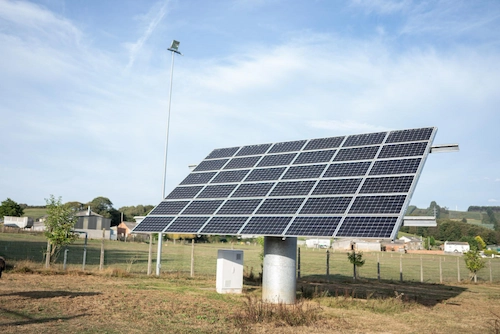
If you have ever seen rows of dark-colored panels on the roofs of houses or buildings, those are called solar panels. This technology captures energy from sunlight and converts it into electrical energy for various daily needs.
So, why are solar panels considered an eco-friendly technology? This technology utilizes renewable energy from sunlight. This energy source is naturally available, can be sustainably replenished, and will not run out like fossil fuels.
Additionally, solar panels generate electricity without combustion. Unlike coal, oil, or natural gas, which produce carbon emissions when used for power generation, solar panels convert sunlight directly into electricity, resulting in significantly lower pollution.
As a form of support for the development of more sustainable energy, PT Krakatau Chandra Energi (KCE), a subsidiary of the Chandra Asri Group, is also providing energy solutions to improve energy efficiency and reduce environmental impact.
To meet diverse needs, KCE offers several solar panel installation options, including the Solar On-Grid System, Solar Off-Grid System, On-Grid with Battery Backup System, and Solar Hybrid System, which integrates solar panels with various other energy sources.
Through these innovations, KCE provides cleaner and more sustainable energy as part of its efforts to support industrial growth with minimal environmental impact.
Read also: Solar Panels: The Functions, Benefits, and Installations!
Termite Mound-Inspired Building Ventilation Systems
Did you know that termites are capable of building nests with highly efficient natural ventilation systems? The structure of a termite mound is designed so that air can circulate throughout the nest, helping maintain stable temperature and humidity levels even as external conditions fluctuate.
This principle has inspired the development of passive ventilation systems in modern buildings. This technology utilizes natural airflow to regulate indoor temperatures without relying entirely on air conditioning (AC).
With more efficient energy use, this ventilation system can help reduce electricity consumption and associated carbon emissions.
Biopores
Have you ever seen small holes dug in the ground around a yard or garden? These holes are known as biopores, an eco-friendly technology designed to enhance water absorption into the soil.
Biopores are created by drilling vertical holes in the ground, which are then filled with organic waste such as dry leaves or food scraps.
Over time, this organic waste decomposes into compost, creating natural spaces in the soil that help rainwater seep in more quickly.
Implementing biopores offers various environmental benefits, such as reducing the risk of waterlogging and flooding, replenishing groundwater reserves, and reducing the amount of organic waste sent to landfills.
Water Harvesting Methods Inspired by Beetles and Spider Webs
Did you know that some animals can obtain water directly from the air? Spiders can capture water vapor through their spinneret, while Namib Desert beetles collect water droplets from fog using their textured body surfaces.
Inspired by these abilities, scientists have developed water-harvesting technology capable of capturing water vapor from the air. This innovation has the potential to become an eco-friendly solution to help meet the need for clean water in regions facing freshwater shortages.
Fibers Inspired by Spider Silk
Spider silk has inspired the development of more eco-friendly synthetic fibers. Compared to conventional synthetic fibers, these fibers offer a more sustainable alternative.
To achieve this, researchers are using genetically modified silkworms that produce fibers similar to spider silk. This technology has the potential to produce textiles that are more environmentally friendly, stronger, and manufacturable on a large scale.
Benefits of Eco-Friendly Technology
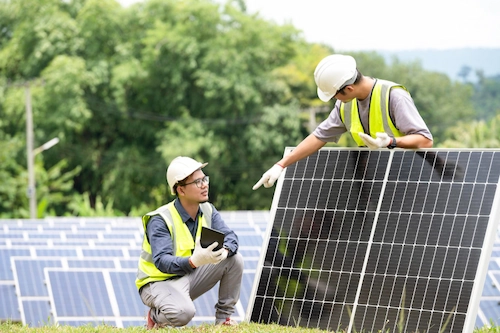
The adoption of green technology offers various benefits for both humans and the environment. Here are some benefits you should know about, including:
- Reducing environmental pollution: Eco-friendly technology is designed to minimize emissions, waste, and other pollutants. As a result, the quality of air, water, and soil can be maintained.
- Saving energy: Many eco-friendly technologies use energy more efficiently than conventional technologies. This helps reduce energy waste while lowering operational costs.
- Reducing greenhouse gas emissions: Various eco-friendly innovations help reduce emissions of carbon dioxide and other greenhouse gases, which are the primary drivers of climate change.
- Helping to save on operational costs: Although some green technologies require a significant initial investment, their use often reduces energy, maintenance, and waste management costs in the long term.
- Promoting innovation and green economic growth: The development of environmentally friendly technologies opens up new business opportunities, creates jobs, and drives more sustainable green economic growth.
That concludes the information on eco-friendly technology, covering its definition, benefits, and examples of its everyday applications.
By utilizing more efficient and sustainable technologies, we can help preserve the environment for both current and future generations.
To help create a cleaner and more sustainable environment, you can join Indonesia Asri.
You can also share your experiences and good habits in protecting the environment as inspiring stories that encourage more people to do the same in the Jejak Asri competition.
You still have the opportunity to submit your article by October 16, 2026. Do not miss this opportunity, as there is a total prize of Rp28 million for 8 winners.
So, register now and make your contribution to preserving Indonesia’s environment!
Read also: Small and Large Scale Plastic Waste Management Methods