

Table of Contents
Of all the waste you produce every day, how much of it actually reaches the landfill site safely? Good waste management doesn’t just start with throwing trash in the right place; it also involves understanding the roles of TPS (Temporary Waste Storage), TPST (Integrated Waste Management Site), and TPA (Final Disposal Site).
To understand the functions and differences among TPS, TPST, and TPA, check out this article.
Definition of TPS, TPST, and TPA
Waste has become a significant challenge in big cities. To date, dedicated facilities are needed to ensure efficient and eco-friendly waste management.
One way to manage waste properly is to provide disposal sites that meet specific needs. There are at least three main types of waste disposal sites, each with its own role. Here are the explanations.
TPS (Temporary Waste Storage)
A TPS is a location where waste is temporarily stored before being transported to processing facilities or final disposal sites. Its primary function is to serve as a collection point, not a place for large-scale processing.
Due to its temporary nature, a TPS is usually relatively simple and does not use many modern technological facilities. Waste at a TPS is collected from the community and then sent to a TPST or TPA.
TPST (Integrated Waste Management Site)
A TPST is a much more complex facility. Here, waste is not only collected but also sorted, recycled, and processed through final stages before disposal. Operations at a TPST typically include collection, sorting, recycling, and final processing.
Some TPST facilities now use advanced technologies such as converting waste into energy, compost, or alternative fuels. With this integrated system, TPSTs play a crucial role in reducing waste that ultimately ends up in landfills (TPA).
TPA (Final Disposal Site)
A TPA is the final point in the waste disposal cycle. At the TPA, waste that has already undergone sorting and processing is disposed of or stored safely to control its negative impacts.
However, the TPA should not merely be a disposal site. The TPA also needs to be designed as a final processing facility to safely manage waste.
According to the latest data from the Directorate for Buildings and Environmental Sanitation Engineering Development, Indonesia currently has 272 TPAs spread across the archipelago. Their total operational area reaches 1,777.17 hectares.
This infrastructure can serve around 10.86 million people, with an operational capacity of up to 30.68 million tons of waste per year. This highlights Indonesia’s commitment to strengthening national waste management.
Read also: How to Get Rid of Trash: Proper Ways You Should Know!
Differences Between TPS and TPST

If you’re still unsure about the difference between TPS and TPST, here are their functions on a scale:
1. Main Function
The TPS serves as a temporary storage site for community waste before it is transported to TPA. Waste here is only stored temporarily.
Meanwhile, TPST is an integrated processing facility that collects, sorts, and processes waste into valuable products or energy. This helps reduce the volume of waste that ends up in the TPA.
2. Waste Processing
At TPS, organic and inorganic waste is mixed without sorting or processing. You can usually find this type of waste disposal site in residential areas.
In contrast, TPST performs deeper sorting, including processing waste into compost, energy, or alternative fuels.
3. Technology Used
TPS is simple and uses minimal technology. Its operational success depends heavily on how quickly workers can transport waste. On the other hand, TPST uses advanced technologies for further waste processing.
4. Scale and Integration
TPS functions only as a temporary collection point, while TPST is more complex and integrated. The TPST typically collaborates with recycling industries and various processing systems to maximize waste utilization.
Differences Between TPS 3R and Waste Banks

Besides TPS and TPST, there are also the terms TPS 3R and waste banks. Each has its own differences:
1. Main Function
TPS 3R (Waste Processing Facility based on the Reduce, Reuse, Recycle concept) is a waste-processing facility that applies the 3R principles (reducing, reusing, and recycling).
TPS 3R is considered better than regular TPS facilities because it can sort and perform initial waste processing. This approach is aligned with the requirements for TPS 3R management as stated in Regulation No. 2 of 2013, Article 29, paragraphs (2) and (3).
Meanwhile, a waste bank is a community-based program or facility that manages waste locally using the 3R principles.
Waste banks accept waste that has already been sorted from households or industries, especially recyclable waste such as plastic, paper, metal, and glass.
2. Waste Sorting and Processing
At the TPS 3R facility, waste is sorted into organic, inorganic, and recyclable materials. Organic waste can be processed into compost or fertilizer, while inorganic waste is reused or recycled.
This sorting and processing system effectively reduces the volume of waste sent to the landfill site. If needed, waste banks can also perform additional sorting. However, their primary focus remains on community-based management, where residents deposit recyclable waste as savings, which is then sold.
3. Benefits and Impact
TPS 3R helps reduce the amount of waste that needs to be transported to the landfill site by performing initial processing and systematic sorting. It also encourages public awareness about sorting waste at home.
Meanwhile, waste banks not only reduce the volume of waste sent to landfills but also provide environmental education to residents and generate economic value by selling recyclable waste.
Read also: 8 Ways of Organic Waste Management, Easy and Eco-Friendly!
Why Are These Waste Disposal Sites Important?
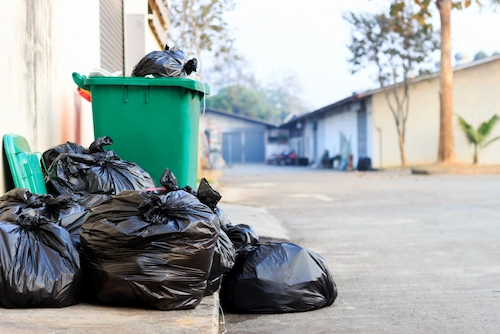
Waste disposal sites such as TPS, TPST, and TPA play a crucial role in sustainable waste management. These facilities not only help reduce the volume of waste sent to landfills but also encourage early-stage sorting and processing, thereby reducing pollution and supporting environmental sustainability.
Implementing an efficient system also opens opportunities for innovation in converting waste into energy, compost, or recycled products, while improving operational efficiency.
Besides, with active support from the community and the government, waste disposal facilities help build a more structured and eco-friendly waste management system, contributing to a positive reputation for the organizations and communities involved.
If you care about the environment and want to learn more about eco-friendly, sustainable waste disposal sites, join Indonesia Asri and become part of a positive environmental movement.
Here, you can join exciting programs like #AksiAsri, which inspires you to embrace an eco-friendly lifestyle and get involved in meaningful waste management activities.
What are you waiting for? Register now with Indonesia Asri and help create a cleaner, healthier planet!
Read also: 7 Types of Plastic Waste and How to Recycle Them, Take Note!