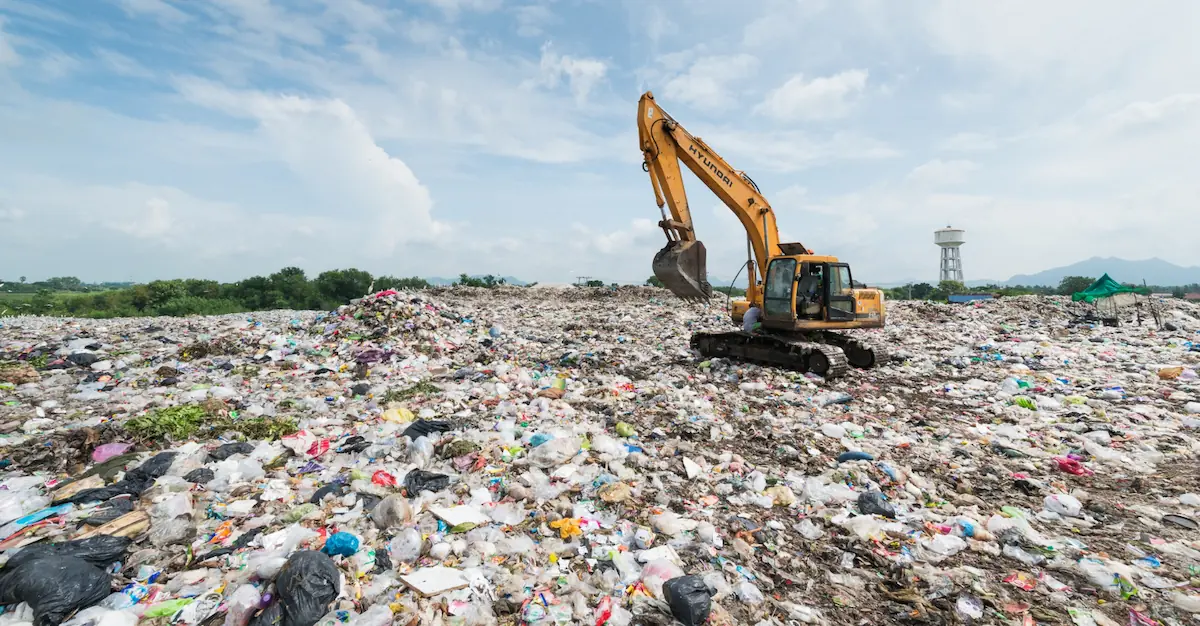
Many landfills are only used as a designated disposal site, causing unpleasant odors and posing various health and environmental risks. However, the Benowo Landfill in Surabaya generates electricity that benefits the community.
With an area of 37.5 hectares, this landfill can convert piles of garbage into electricity to help meet Surabaya residents’ needs.
Read this article to the end to learn more about Benowo Landfill and its beneficial innovations.
Getting to Know Benowo Landfill
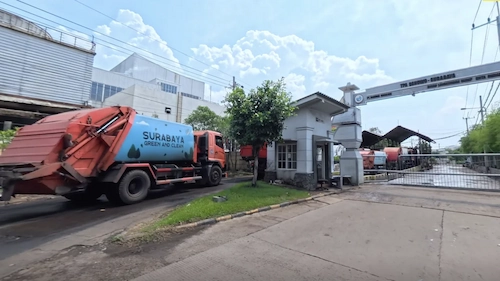
Benowo Landfill is located in Sumberrejo Village, Pakal District, Surabaya City, and its location is close to the Gresik area.
This site covers approximately 37.5 hectares and has been in use since 2001 to manage waste from Surabaya and the surrounding areas.
At Benowo Landfill, waste is not only dumped but also allowed to accumulate. Incoming waste is first separated, then compacted and reprocessed.
Some organic waste is also processed into compost. In addition, the gas that emerges from the piles of waste is utilized rather than wasted.
Around 2013, the Surabaya City Government collaborated with Kitakyushu City, Japan, through the Green Sister City program. In this collaboration, Kitakyushu City assisted in developing a modern waste management system in Surabaya.
The city of Kitakyushu is known for successfully transforming waste into more useful products, making it a model for this project’s development.
Following this collaboration, the Benowo Landfill began using more modern technology to process liquid and gas waste from garbage. The gas produced from processing is then used to generate electricity.
That is why the Benowo Landfill is now not only a garbage disposal site but also a place that produces electricity from waste.
Read also: Differences between Waste and Garbage, Don’t Misunderstand!
Breakthrough of Benowo Landfill: Waste Processing into Electric Power
Benowo Landfill not only functions as a waste disposal site but also has a modern processing system capable of converting waste into electricity.
Here is an explanation of the amount of waste contained and the processing steps until it can produce electricity:
Electricity Generation
In the past, Benowo Landfill was known as a waste disposal site that caused unpleasant odors. However, this place has now been transformed into a waste-processing facility capable of generating electricity.
With a capacity of around 1,500 tons of waste per day, Benowo Landfill plays an important role in waste management operations. This amount can even increase at certain times, for example, during Ramadan, when the volume of community waste is usually higher.
Most of the waste processed at the Benowo Landfill is household waste. However, not all types of waste are processed at this landfill.
Trash such as furniture waste or large-sized items is usually returned to the relevant parties and is not processed into electricity.
Using modern processing technology at the Benowo Landfill, these piles of trash are converted into electricity that benefits the community.
Developed Since 2012
Waste-to-electricity processing at the Benowo Landfill has been carried out since 2012 using the Landfill Gas Power Plant method.
This method utilizes gas from waste piles to generate electricity. At that time, about 600 tons of waste per day could produce 1.65 megawatts of electricity.
In 2015, the Benowo Landfill began developing the more modern Gasification Power Plant technology. This technology converts waste into gas through a heating process, which is then used to generate more electricity.
Its development was temporarily hindered due to the COVID-19 pandemic, but it resumed in March 2021.
Now, around 1,000 tons of waste per day can be processed into 12 megawatts of electricity. Some of the electricity is supplied to PLN (Perusahaan Listrik Negara/State Electricity Company) to meet the needs of the people of Surabaya and the surrounding area, while the rest is used for operations and as a power reserve at the Benowo Landfill.
Read also: What Is Residual Waste? Characteristics, Types, and How to Manage It
Waste Processing at Benowo Landfill
The process of converting waste into electricity at the Benowo Landfill begins with the waste-weighing stage. After that, the waste is taken to the sorting area or the waste pit for separation before further processing.
In the next stage, the waste is moved using equipment such as large grabs and then placed into a gasifier (gasification reactor).
Inside the gasifier, the waste is heated at high temperatures with limited air, preventing complete combustion. This combustion process is carried out to break down the waste and convert it into synthetic gas (syngas). The syngas produced is then burned to drive a turbine and generate electricity.
Gasification technology can produce more electricity compared to previous methods, but its effectiveness still depends on the facility’s design and the quality of the waste.
In addition to generating electricity, Benowo Landfill also utilizes liquid from waste called leachate. This liquid is reprocessed to become cleaner water.
Meanwhile, combustion residues such as bottom ash and fly ash are not immediately discarded, but are first collected for research so that they can be reused in the future.
Bottom ash is coarse ash residue found at the bottom of the furnace, while fly ash is fine ash carried along with smoke during the combustion process.
In this way, almost all waste-processing results can be utilized, making the process more environmentally friendly.
That concludes the explanation about Benowo Landfill and its breakthroughs in waste processing. Through modern technology, waste that was previously discarded as refuse can now be converted into useful electricity.
Benowo Landfill also serves as an example of waste management that helps protect the environment while also generating energy. This shows that waste can be reused if processed properly.
In addition to modern waste processing, protecting the environment can also be done through daily habits and participation in environmental awareness movements.
One of them is through Indonesia Asri, a movement that encourages people to be more caring towards the environment through various simple actions that have a positive impact.
Currently, you can participate in Jejak Asri, a campaign that encourages people to share their experiences in adopting an environmentally friendly lifestyle.
Through this program, you can show the small contributions you have made to protect the environment while also inspiring others.
The stories submitted will have a chance to win prizes worth up to millions of rupiah. Register now and share your inspiring story before October 16, 2026.
Read also: 7 Inorganic Waste Management Ideas, from Simple to Complex