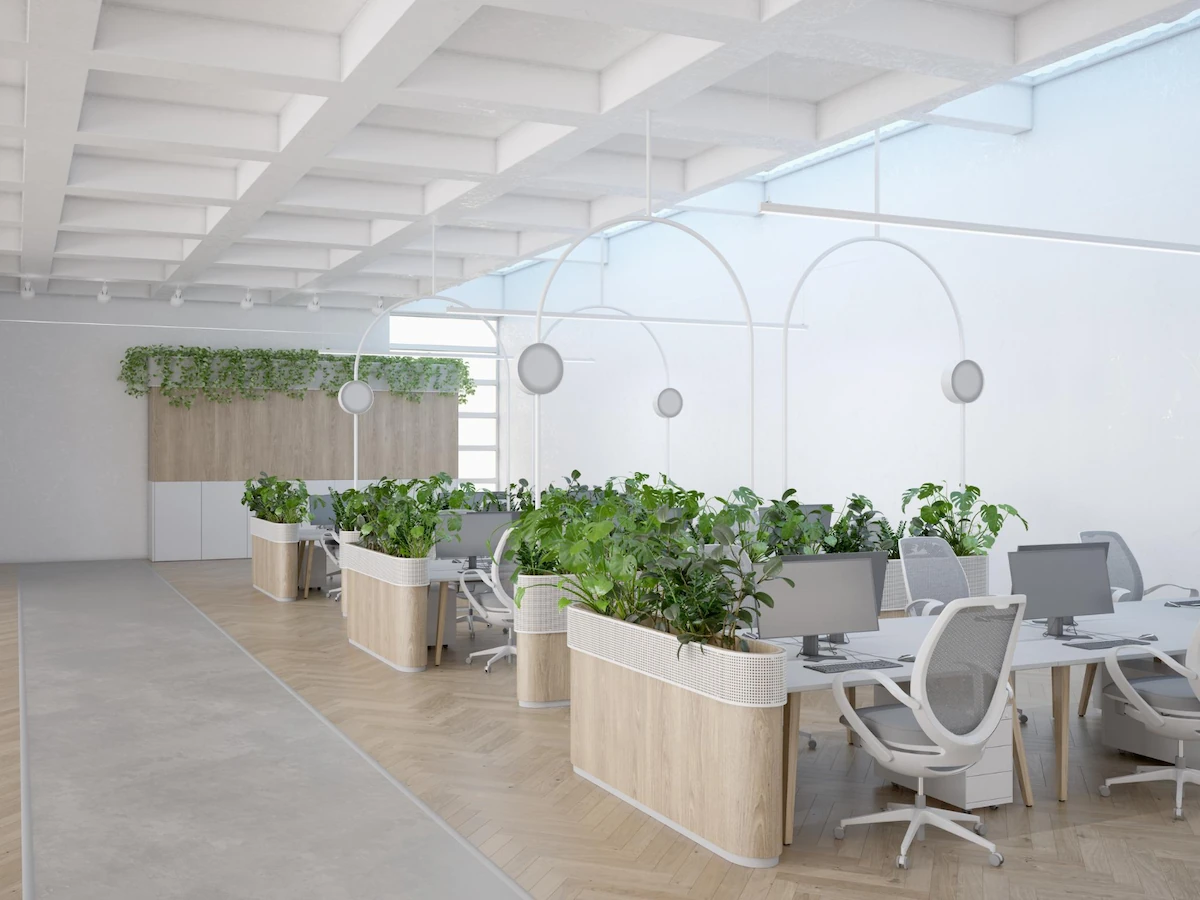
An office can be more than just a place to work. The way an office is built and operated determines how much energy it uses, how much waste it produces, and its impact on the environment. This is where the concept of the green office comes from.
Implementing a green office requires considering many aspects, from infrastructure to employee habits. If you want to understand the concept in depth so you can implement it properly, check out the following explanation!
What Is a Green Office?
A green office is a concept designed to reduce negative environmental impacts while keeping work productive.
The green office concept isn’t just about saving electricity; it also reflects a company’s commitment to sustainability and supports ESG (Environmental, Social, and Governance) reporting.
Characteristics of a Green Office
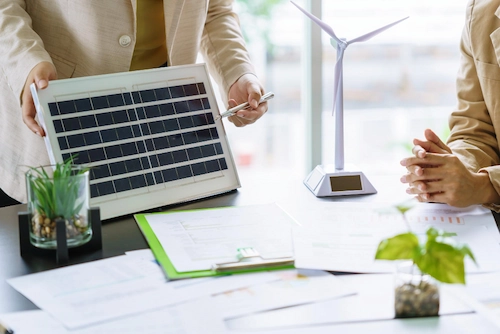
So, what does implementing a green office look like in practice? The following are the key characteristics of a green office:
Green Infrastructure
Green infrastructure refers to the use of design, materials, and technology that help to reduce environmental impact while enhancing user comfort.
One such application is biophilic design, a design approach that incorporates natural elements into a space, such as plants, wood, or natural lighting.
Additionally, green infrastructure can also include efficient lighting and ventilation systems, low-emission materials, and environmentally friendly furniture.
Green Operations
Green operations refer to managing office operations that prioritize resource efficiency and reduce environmental impact. These practices can include energy and water efficiency, waste management, and monitoring of resource consumption. For energy management, you can use technologies such as smart lights that can be controlled via a smartphone.
Green Culture
Green culture refers to a work culture that encourages employees to adopt awareness and behaviors that support environmental sustainability. Thus, it focuses on employee behaviors that align with the general principles of a green office.
Examples include sorting trash, reducing paper usage, and using more environmentally friendly transportation.
Recommended reading: DEI in the Workplace and Its Relationship with ESG
How to Implement a Green Office
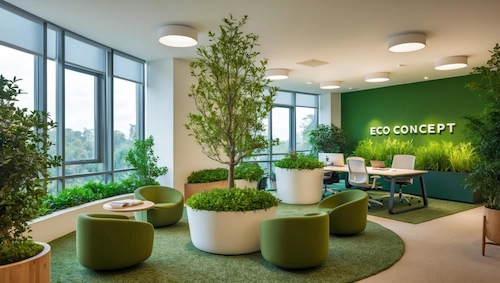
If your office is interested in implementing the green office concept in your company, here are some ways to do it:
Digitizing Work Processes
Digitizing work processes aims to reduce the environmental impact of office administrative activities. This practice is closely related to a paperless culture that reduces paper, ink, printing energy, and waste from unused documents. Some alternatives to support the digitization of work processes include:
- Create and save reports in digital format.
- Store company records in cloud storage.
- Share internal documents via email.
If printing is still necessary, use FSC (Forest Stewardship Council) certified paper that supports responsible forest management. It is also recommended to use energy-efficient printers and more environmentally friendly ink.
Implementing Energy Efficiency Principles
You can achieve energy efficiency by reducing electricity consumption without compromising office operations. Here is how to do it:
- Maximize natural light through windows to reduce lamp usage during the day.
- Use LED lights and sensor-based lighting systems that can adjust lighting based on ambient light conditions.
- Make it a habit to turn off air conditioners, computers, and other electronic devices when not in use.
- Replace desktop computers with laptops, as laptops generally require less electricity.
- Install solar panels to harness solar energy as a renewable power source.
Implementing Sustainable Transportation
To implement a green office, companies must also consider transportation. Companies can encourage employees to adopt sustainable transportation practices, including by:
- Providing bicycle parking areas and supporting facilities for cyclists.
- Encouraging the use of public transportation.
- Providing carpooling facilities, which involve sharing a vehicle with others on the same route. The goal is to reduce fuel consumption and lower CO2 emissions.
- Offering hybrid work options to reduce commuting to the office.
Managing Waste Effectively
This can begin by providing separate trash bins for organic, inorganic, and electronic waste. Sorting at the source helps reduce the amount of waste that ends up in landfills while ensuring each type of waste receives appropriate treatment.
Adding Green Spaces to the Office Environment
The final way to create a green office is to add green spaces inside and around the building.
This can have a positive impact because plants absorb carbon dioxide and release oxygen through photosynthesis, helping to create a more comfortable work environment. Here are some steps you can take:
- Place indoor plants on desks, such as Peace Lilies and Snake Plants (Sansevieria), or in the lobby area, such as Money Trees (Pachira) and Dracaena.
- Create a vertical garden on the walls in specific areas.
- Create a rooftop garden if the building’s conditions allow it.
Related post: Instantly Green Up Your Space with Houseplants, Check Out These Recommendations!
Benefits of a Green Office
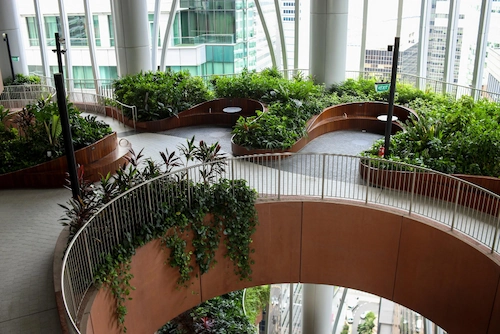
Implementing the green office concept will bring the following benefits:
- Improving work environment quality: Natural lighting helps create a workspace that feels more connected to the environment. Plants that absorb CO2 also help purify the air. Together, these factors can make the workspace more comfortable.
- Supporting employee health and creativity: According to an article in the journal Atmospheric Pollution Research (2022), offices that incorporate natural elements and provide a more comfortable environment can support employees’ well-being, concentration, and creativity.
- Reducing operational costs: Research published in the journal Building Research & Information (2021) shows that implementing green office building concepts can result in energy and water savings of up to 58.65% over the building’s lifecycle.
- Enhancing corporate reputation: A green office demonstrates a company’s commitment to the environment and social responsibility. Furthermore, this concept can also increase the company’s appeal to customers, partners, and prospective employees.
- Reducing CO2 emissions and environmental impact: Through energy efficiency, waste management, and responsible resource use, companies can reduce CO2 emissions and minimize the negative environmental impact of their operations.
Did you know? Chandra Asri Group, specifically the OPE Admin Building, has also implemented green building concepts and earned the Green Building EDGE Advanced certification from the Green Building Council Indonesia.
This certification evaluates three main aspects: energy efficiency, water efficiency, and embodied carbon in materials. This achievement shows that the Chandra Asri Group has exceeded basic standards for improving building efficiency while reducing its environmental impact.
Join Indonesia Asri & Continue Your Actions for the Environment!
That concludes the information on the interesting concept of a green office, which prioritizes resource efficiency and supports environmental conservation efforts.
Ultimately, a green office is not just about making a building look greener, but also about operating it responsibly to have a positive long-term impact on the environment.
This principle also aligns with sustainable living, which can start with simple daily habits, including choosing motor vehicles that run on more environmentally friendly fuels.
Want to take other environmental actions alongside people who share the same vision? Come join various environmental conservation campaigns from Indonesia Asri.
By joining as a Warga Asri, you will gain exclusive access to various activities, have the opportunity to meet experts from various fields, and redeem Indonesia Asri Points for exclusive merchandise.
So, what are you waiting for? Register now and make your contribution today to ensure a better future for our planet!
More to explore: What Is Sustainable Living and Why Should We Adopt It?