
Key Takeaways
- Trash must be sorted by type: organic, inorganic, hazardous (B3), liquid, and solid.
- Sorting trash is very easy, from setting up designated trash bins to educating family members to get involved.
- Sorting trash can reduce landfill waste and lower the risk of environmental pollution.
Sorting is a key step in waste management. This process separates waste by its type so it doesn’t end up in landfills, since it can be processed into useful products.
So, how do you sort waste effectively? Learn the steps, types of waste, and why sorting matters here!
Types of Waste
Before learning how to sort waste properly, you can understand the different types of waste to make categorization easier. According to their properties, waste is divided into organic, inorganic, and hazardous (B3) waste. Based on form, waste is also divided into liquid and solid waste. Here is the explanation of the categories:
Types of waste based on their properties
- Organic waste: Derived from materials that decompose naturally, such as vegetable scraps, fruit peels, tree branches, and dry leaves. This type of waste can be processed into compost or eco-enzymes
- Inorganic waste: Derived from materials that decompose slowly, such as cardboard, glass, cans, and paper. Inorganic waste can be processed into crafts or crushed for use as raw materials in production.
- Hazardous and Toxic Waste (B3): Waste containing substances that can harm living organisms, ecosystems, and the environment, such as medical and electronic waste. This type of waste must be processed specifically at B3 waste treatment facilities.
Types of waste based on their form:
- Liquid waste: Waste in liquid form resulting from human activities, such as water from manufacturing processes, wastewater from washing, liquid effluents, and others. This type of waste must be treated using specialized methods by a wastewater treatment system.
- Solid waste: Waste with a physical form, such as used fabric, cardboard, and cans. You can recycle this type of waste at recycling facilities or process it at home.
Related post: 6 Waste Management Strategies You Can Wisely Implement
How to Sort Waste Effectively
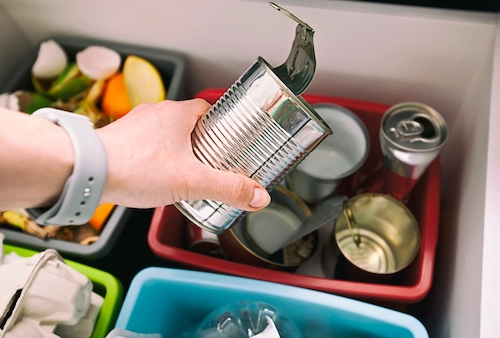
To sort waste, set up separate bins for each type, identify the types, separate hazardous waste (B3), process the waste by type, and schedule waste collection. Here are the complete steps:
Setting Up Different Types of Trash Bins
First, set up separate trash bins for each category listed above. For example, a bin for organic waste, a bin for recyclable inorganic waste, a bin for non-recyclable inorganic waste, and a bin for hazardous waste.
Next, label them by intended use so they are easy to identify. Place these trash bins in an easily accessible area, such as behind the house or near the kitchen.
Sorting Trash by Type
After setting up your trash bins, you can start sorting your trash by type. Collect your daily trash in the evening, then sort it and place it in the proper bin.
Once it becomes a habit, you can sort waste as you go about your daily activities, such as disposing of organic waste in the organic bin while cooking and placing food packaging in the inorganic bin for easy recycling after consumption. The collected waste can then be reprocessed.
Sorting Hazardous Waste Wisely
Not all hazardous waste can be mixed, as this can potentially cause dangerous chemical reactions. For example, avoid mixing batteries with acidic liquids, as these liquids can corrode the batteries and cause dangerous leaks.
To be safe, wrap each item of hazardous waste tightly and label each package for easy identification. These labels will make the hazardous waste sorting easier for processing facilities before treatment.
If possible, set up a separate hazardous waste bin for batteries, medications, medical masks, used electronic devices, and other types of hazardous waste commonly found at home.
Sorting Waste by Type
Manage waste by type. For example, you can turn collected organic waste into compost or eco-enzymes to fertilize plants. Meanwhile, inorganic waste that is easy to recycle at home can be turned into crafts, such as flower pots made from paint cans, aquariums made from plastic water jugs, and so on.
Organic waste, such as vegetable scraps and fruit peels, must be processed or disposed of within 24–48 hours to prevent attracting insects and disease-carrying pests. Also, store inorganic waste intended for recycling in a dry area and keep it separate from organic waste to prevent contamination.
Scheduling Waste Drop-Offs
If you have trouble sorting waste due to time constraints or a lack of tools, take it to a waste bank or the nearest recycling facility in your city. Some waste bank programs offer incentives for every kilogram of waste dropped off.
Educating Your Family on How to Sort Waste
Waste sorting will not be effective unless everyone works together. Therefore, involve and teach your family members how to properly sort organic and inorganic waste and establish a habit of sorting waste at home.
Recommended reading: Waste Management System: Types, Stages, and Methods
Why Should We Sort Waste?
There are several reasons why sorting waste is important for the environment, including:
- Separate easily recyclable waste from waste that is difficult to recycle.
- Separate organic, inorganic, and hazardous waste (B3) to prevent cross-contamination.
- Reduce waste sent to landfills.
- Reuse waste that still has value and functions well.
- Extend the useful life and value of a product.
- Save energy by avoiding the need to use new raw materials to make new products.
- Reduce pollution caused by poorly managed waste piles.
- Encourage more people to practice sustainable living and waste sorting at home.
Let’s Sort Waste Together with #AksiAsri and Indonesia Asri!
Waste sorting is a habit we must cultivate to reduce waste generated from daily activities and to extend the useful life of products.
If you want to start this sustainable habit, you can join one of Indonesia Asri’s #AksiAsri programs: Operasi Semut (Community Cleanups).
Operasi Semut is a sustainable, community-based initiative that educates the public on the importance of sorting waste before disposal and recycling through the hashtag #pilahsampah. This initiative takes place at various events in Jakarta, such as Car Free Day (CFD) and prestigious sporting events like the Jakarta Running Festival.
So, join Warga Asri now and spread the habit of sorting waste to those closest to you!
Further reading: Get to Know TPST, a Crucial Facility for the Environment
Frequently Asked Questions (FAQ)
Here are some questions about how to sort trash properly:
1. What Are Reduce, Reuse, Recycle, Replace, and Repair?
Reduce refers to efforts to minimize the use of products to prevent the generation of more waste; reuse means using products that are still in good condition without processing them into new items; recycle involves turning waste into new products; replace means substituting single-use products with more sustainable alternatives; and repair means fixing broken items to extend their useful life.
2. What Are Some Examples of Waste Reduction Programs?
Examples include the 3R program, waste banks, programs that convert plastic waste into pyrolysis oil, and programs that convert plastic waste into plastic asphalt.