Key Takeaways
- Burning trash can lower air quality and leave residues that potentially pollute soil and water.
- Smoke from burning can trigger health issues and increase the risk of lung and heart problems, and even cancer.
- Open burning can also potentially cause fires and boost greenhouse gas emissions.
Piled-up trash might seem like a simple problem to solve by burning it. In reality, the dangers of burning trash can come from smoke, ash, and leftover residues.
This habit can harm the environment and threaten our health if it continues. Let’s get to know the dangers of burning trash more in the discussion below!
The Dangers of Burning Trash to the Environment
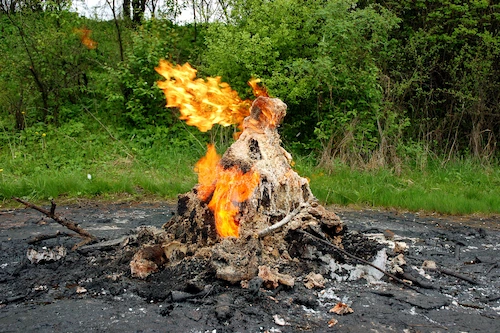
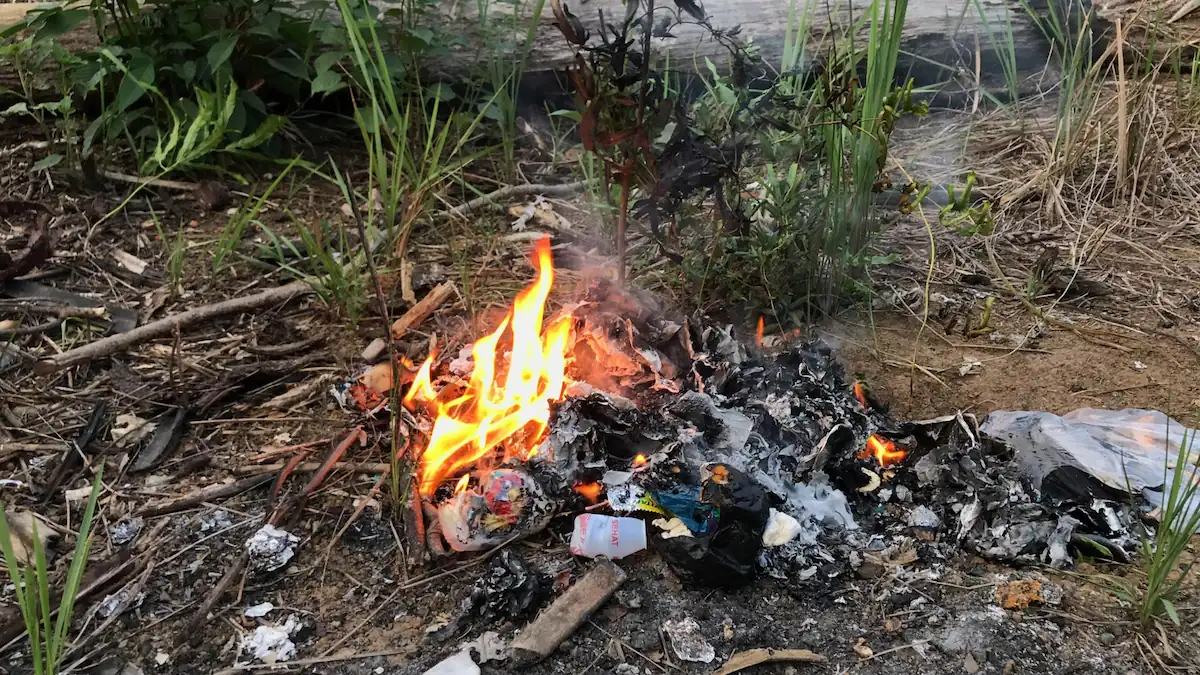
Piles of trash in the yard can often be disruptive. To get rid of it quickly, some people choose to burn it until only ashes are left. Once the fire goes out, the area does look cleaner.
However, the trash that’s burned does not really disappear completely. Some of it turns into smoke and releases into the air, while the rest leaves ash and residue at the burn site. This means that just because the pile looks smaller does not necessarily mean its environmental impact has ended.
So, what kind of effects can come from the habit of burning trash? Check out the dangers it can pose to the environment one by one below:
Causing Air Pollution
Smoke from burning trash can carry fine particles and various pollutants that spread into the air.
Some substances or compounds that can form from burning trash include carbon monoxide (CO), nitrogen oxides (NOx), sulfur dioxide (SO₂), fine particles (PM2.5), and volatile organic compounds (VOCs). Burning certain materials can also produce dioxins and furans.
These particles and pollutants can spread through the air, potentially affecting the air quality in the surrounding environment. Therefore, burning trash openly is not a proper way to reduce waste.
Polluting the Environment
Another environmental danger of burning trash is the ash and residue, which can cause soil pollution. If burning is done repeatedly in the same place, the residue can accumulate.
When it rains, some of the substances from the leftover ash can be carried by water and seep into the soil. Rainwater flowing on the surface can also carry the residue to ditches, drains, rivers, or nearby water sources, potentially affecting water quality.
Risk of Spreading Fires
Fire from burning trash can also spread without being noticed. Embers or still-burning materials can be carried by the wind and land on dry grass, leaves, or other easily flammable objects.
The risk increases when people burn trash near buildings, dry land, or areas with lots of dried vegetation. A fire started to handle a small amount of trash become hard to control.
Worsening the Impact of Climate Change
Burning trash releases greenhouse gases, including carbon dioxide (CO₂), into the atmosphere. Repeatedly burning large amounts can increase the concentration of greenhouse gases that trap heat in the atmosphere.
The impact is not immediately visible after just one burn. However, constantly burning trash can increase emissions that may worsen climate change in the long run.
Explore more: 9 Examples of Non-Renewable Energy You Should Know
The Dangers of Burning Trash for Your Health
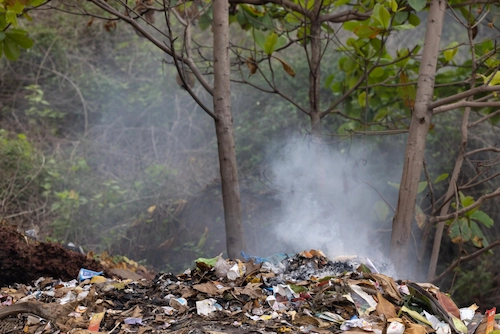
Burning trash produces smoke that carries pollutants. When inhaled, these pollutants could be absorbed by the body. If exposure happens repeatedly, it can increase the risk of health problems, such as:
- Coughing and shortness of breath occur because smoke can irritate the respiratory tract and make breathing uncomfortable.
- Red, watery eyes result from smoke and particles that can irritate the eyes.
- The nose and throat may feel sore, especially when you’re too close to the smoke source or inhale it directly.
- Headaches and nausea can occur after exposure to smoke from burning.
- Long-term exposure to smoke pollutants increases the risk of lung and heart problems.
- It also increases the risk of cancer because burning smoke can contain certain carcinogenic substances.
- Kids are more vulnerable to respiratory problems and infections because their respiratory system is still developing and more sensitive to smoke pollutants.
- For pregnant women, exposure to air pollution from burning during pregnancy can also increase the risk of preterm birth and low birth weight.
Also worth reading: 6 Causes of Air Pollution and How to Reduce Its Exposure
Why Is Burning Trash So Dangerous Nowadays?
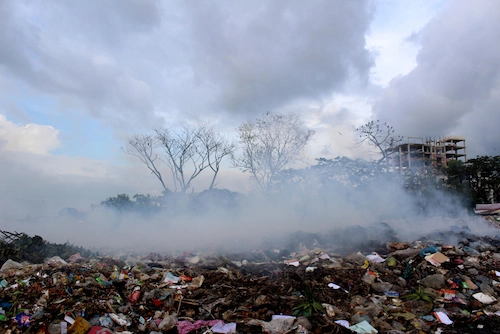
Burning trash may seem like a practical way to reduce piles of garbage at home. However, the current state of waste differs greatly from a few decades ago.
Back then, household waste mostly consisted of wood and paper, but now it’s much more diverse, including various synthetic materials and layered paper. This change makes open burning of trash not the same as burning regular organic materials.
When different types of waste materials are burned together, the burning process can release more pollutants into the air. This means reducing trash volume by burning it does not automatically eliminate its impact.
The problem gets bigger because burning in open spaces, like barrels or burn pits, usually happens at relatively low temperatures. Oklahoma State University notes that this type of burning typically occurs around 400–500°F (about 204–260°C), so materials don’t burn efficiently.
This incomplete burning can produce various pollutants. Smoke can contain particulates and other compounds that may affect health, especially for kids, pregnant women, the elderly, and people with existing breathing problems.
The impact doesn’t stop once the fire goes out. Repeated burning in the same spot can leave harmful substances around the burn area. Meanwhile, wind-carried ash and smoke can spread pollutants into the surrounding environment.
It’s Time to Stop Burning Trash and Join #AksiAsri
The dangers of burning trash to the environment deserve our attention. Burning trash might seem like a quick way to reduce piles, but its impact can spread to the air, soil, water, health, and even the climate.
Therefore, choose more responsible waste management methods and help protect the environment with Indonesia Asri.
At Indonesia Asri, you can join various activities to build more sustainable habits. Through #AksiAsri, you as Warga Asri can find a variety of programs and environmental activities to do together.
You can join Jejak Asri, participate in Operasi Semut activities, or join the EcoCircular Fellowship Program available at #AksiAsri. Every small step you take with other Warga Asri can be part of the movement to protect the earth.
So, register yourself immediately and start your good deeds with Indonesia Asri!
Related posts: 6 Types of Environmentally Friendly Fuels You Should Know About
Frequently Asked Questions (FAQ)
Still curious about the impact of burning trash? Check out a few questions below to better understand the risks!
1. Why Should Trash Not Be Burned?
Trash should not be burned carelessly because open burning can produce smoke and pollutants, leave residues that can contaminate soil and water, and increase the risk of larger fires.
2. What Are the Effects of Inhaling Trash Smoke?
Inhaling trash smoke can irritate the respiratory system and increase the risk of health issues, especially with repeated or heavy exposure.
3. What Does Smoke from Burning Trash Produce?
Uncontrolled trash burning can produce carbon monoxide (CO), nitrogen oxides (NOx), sulfur dioxide (SO₂), fine particles (PM2.5), volatile organic compounds (VOCs), and compounds like dioxins and furans.