Every living being needs a place that supports its survival. Plants, animals, and even microorganisms live alongside their surroundings and interact with one another to create a natural balance that is essential for life.
This balance forms various types of ecosystems, each with different characteristics and functions. In this article, you will learn about various types of ecosystems, their characteristics, and examples found around us. Let’s check out the full explanation until the end!
Various Types of Ecosystems and Their Examples
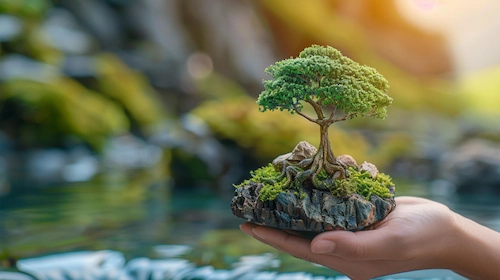
Before diving into the information on various types of ecosystems, let’s first understand what an ecosystem is. Simply put, an ecosystem is a unity of living beings (biotic components) and non-living environments (abiotic components) that interact within a given area.
The interaction between biotic and abiotic components creates an ecosystem balance that allows each living being to play its respective role.
For example, plants use sunlight, water, and nutrients to grow. Then, plants become a food source for herbivores, which are then eaten by carnivores. This series of interactions shows that every component in an ecosystem depends on the others to maintain nature’s balance.
Based on the environment in which the interaction takes place, ecosystems are divided into two types: terrestrial and aquatic. Each ecosystem has different characteristics, components, and biodiversity. Here is the full explanation:
Terrestrial Ecosystem
A terrestrial ecosystem is an ecosystem that exists on land. Its area is approximately 148.9 million km², or about 29% of Earth’s total surface area.
Terrestrial ecosystems are divided into several types, namely forests, grasslands, deserts, and tundra. Each type has its own characteristics, climate, and biodiversity, shaped by its regional conditions.
Forest Ecosystem
A forest ecosystem is a terrestrial ecosystem dominated by trees and has high biodiversity. In 2024, Indonesia’s forested land totaled around 95.5 million hectares, or 51.1% of the country’s total land area.
Besides being habitats for various living creatures, forest ecosystems also play an important role in maintaining the water cycle, storing carbon reserves, producing oxygen, and reducing the risk of erosion.
Based on climate and vegetation conditions, forest ecosystems can be divided into several types, namely tropical rainforests, peat forests, and monsoon forests. Meanwhile, based on soil characteristics, forest ecosystems are divided into three types, namely mangrove forests, coastal forests, and swamp forests.
Each has different characteristics, ranging from humidity levels and the types of plants that grow to the animals that can adapt to them.
Read also: What Is a Conservation Forest? Get the Full Explanation Here
Desert Ecosystem
Desert ecosystems can be found in various parts of the world, like the Sahara Desert in Africa, the Arabian Desert in the Middle East, and the Gobi Desert in Asia. These ecosystems are located in areas with very low rainfall, usually less than 250 mm per year.
These conditions make the desert environment quite dry, with temperatures that can change drastically, very hot during the day and much cooler at night.
Grassland Ecosystem
The grassland ecosystem is dominated by stretches of grass with relatively few trees. This ecosystem generally forms in areas with moderate rainfall, which is sufficient to support grass growth.
In general, grasslands are divided into two types: tropical grasslands (savannas) and temperate grasslands.
Savannas usually have a few trees spaced far apart, while temperate grasslands are almost entirely covered with grass, with few trees.
Grasslands serve as a habitat for various herbivores, such as zebras, bison, deer, and antelopes. The presence of these animals also supports the food chain, as they become a food source for various predators.
Tundra Ecosystem
The tundra ecosystem is a terrestrial ecosystem found in very cold regions, such as around the North Pole (Arctic) and in high mountain regions.
One of the distinctive features of the tundra ecosystem is the presence of permafrost, a layer of soil that remains frozen for almost the entire year. This condition limits plant root growth, so the vegetation that dominates the tundra usually consists of mosses, lichens, short grasses, and small shrubs.
Even though it has extreme environmental conditions, the tundra is still home to various animals that have adapted to the cold, such as reindeer, Arctic foxes, snowy owls, musk oxen, and polar bears.
Aquatic Ecosystems
Aquatic ecosystems are those in which all or most of the area is covered by water. Based on water characteristics, aquatic ecosystems are divided into marine and freshwater. Here’s a further explanation of marine ecosystems and freshwater ecosystems:
Marine Ecosystem
A marine ecosystem exists in water with a high salt content, about 35 ppt (parts per thousand). This ecosystem covers a very large area, ranging from the coast, seagrass beds, and coral reefs to the open sea.
The vast expanse of the ocean provides habitat for a wide range of living things. In this ecosystem, there are various organisms, such as phytoplankton, seaweed, fish, mollusks, turtles, dolphins, and even whales.
Freshwater Ecosystem
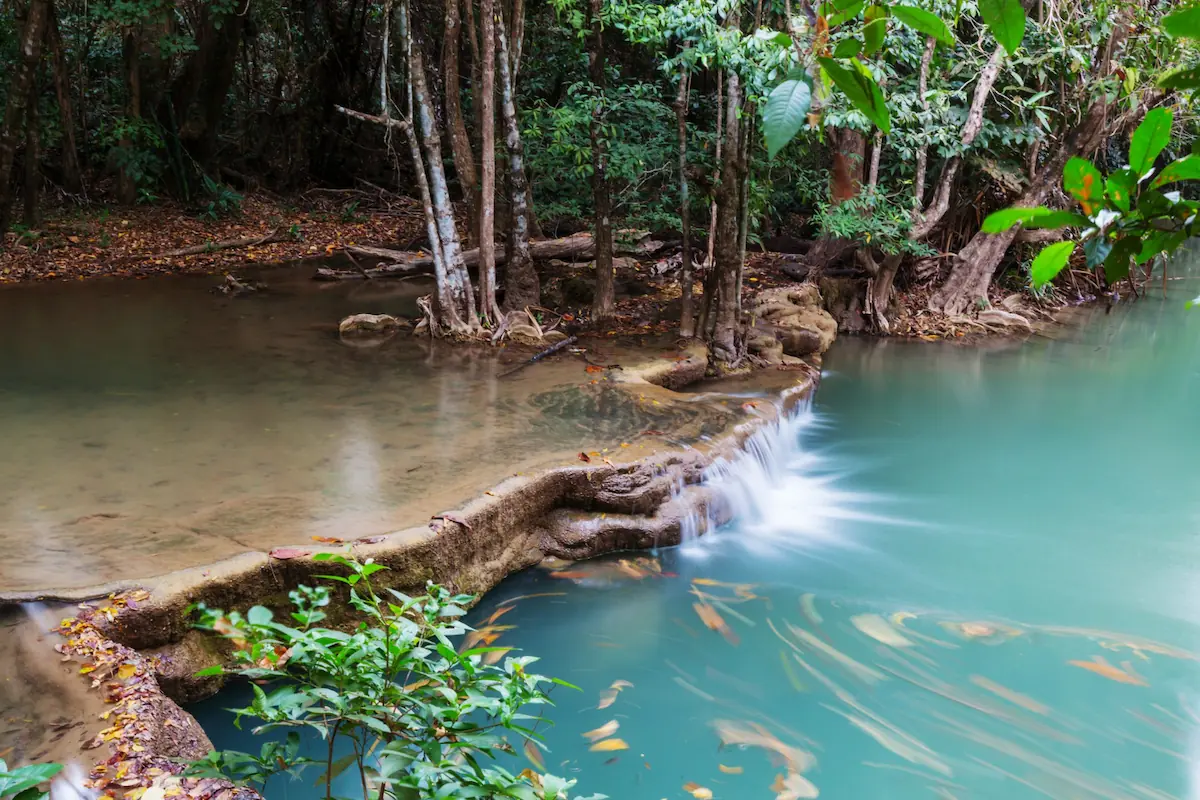
A freshwater ecosystem has a very low salt content, less than 0.5 ppt. This ecosystem can be found in rivers, lakes, swamps, springs, and reservoirs, with characteristics influenced by different currents, depths, and water temperatures.
Some organisms commonly found in freshwater ecosystems include freshwater fish, frogs, shrimp, aquatic insects, and aquatic plants such as lotuses and water hyacinths.
Read also: What Is a Biotic Environment? Discover Its Components
Important Ecology Concepts for Ecosystems
An ecosystem is not just made up of living things and the environment where they live, but also built from various interconnected ecological concepts. These concepts explain how organisms interact, obtain energy, and maintain the balance of nature. Here are some important ecological concepts to understand:
Ecological Pyramid
The ecological pyramid is a diagram that shows the amount of energy, biomass, or population of organisms at each trophic level in an ecosystem.
Ecological pyramids are generally divided into three types: pyramids of numbers, biomass, and energy. All three help illustrate the relationship between producers, consumers, and decomposers in maintaining ecosystem balance.
Food Chain
A food chain is a sequence of energy transfer from one living creature to another through eating and being eaten. A food chain usually starts with producers, like plants, then continues to primary consumers, higher-level consumers, and finally to decomposers, which break down the remaining organisms.
Food Web
A food web is a combination of several interconnected food chains within an ecosystem. This concept shows that a single organism can serve as a food source for multiple species or prey on several types of organisms simultaneously.
That concludes the explanation about various types of ecosystems, along with their characteristics and examples. Every ecosystem plays an important role in maintaining nature’s balance, so it’s our responsibility to help preserve them.
If you want to start contributing to creating a more sustainable environment, join the various campaigns and programs organized by Indonesia Asri. At Indonesia Asri, you can learn and get involved in various positive actions to support environmental sustainability.
To gain broader access to programs, exclusive information, and opportunities to participate in community activities, you can join as a Warga Asri.
Come on, register now to join Warga Asri and let’s work together to make Indonesia more sustainable!
Read also: Tropical Rainforest: Definition, Characteristics, & Functions