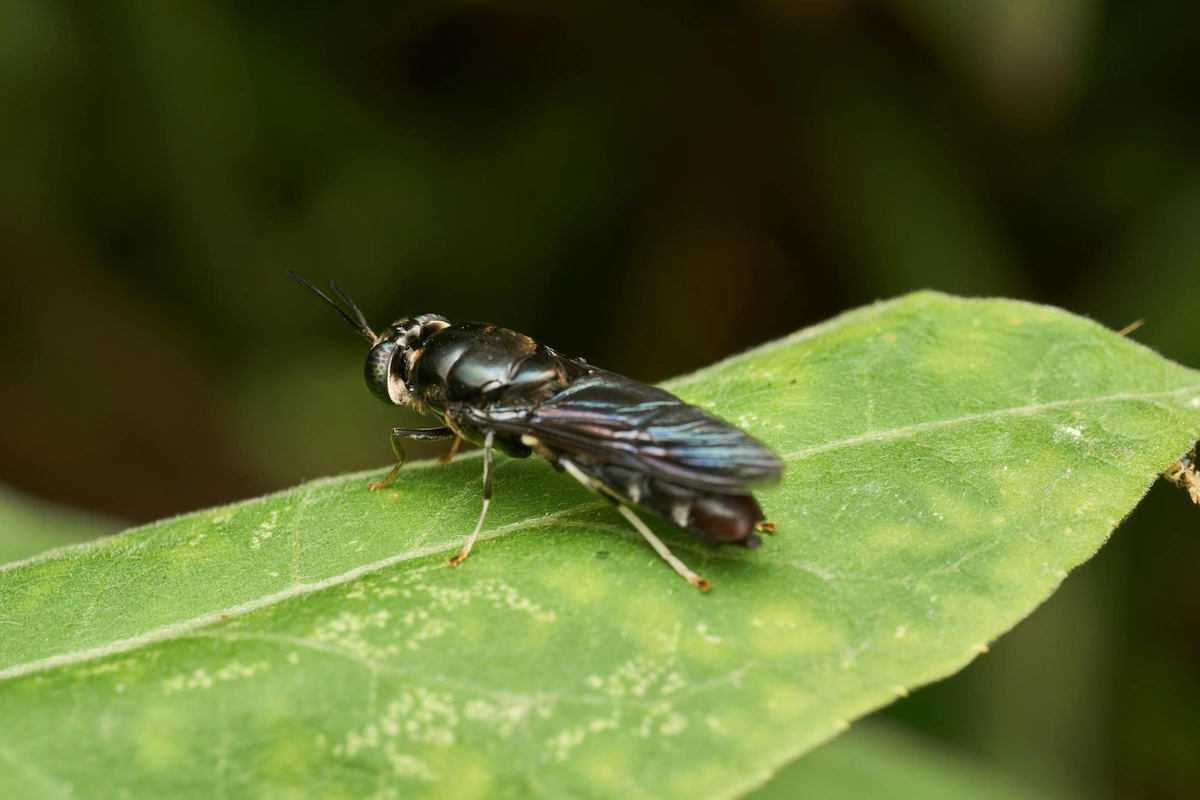
The management of organic waste is increasingly being discussed as the volume of household and industrial waste continues to rise. One solution that is gaining traction is the use of insect decomposers, such as the BSF, to aid in waste treatment.
The BSF is an insect known for its effectiveness in decomposing organic waste in an environmentally friendly manner while producing maggots with economic value. To gain a deeper understanding of its role and benefits, read the full explanation in this article!
What Is BSF?
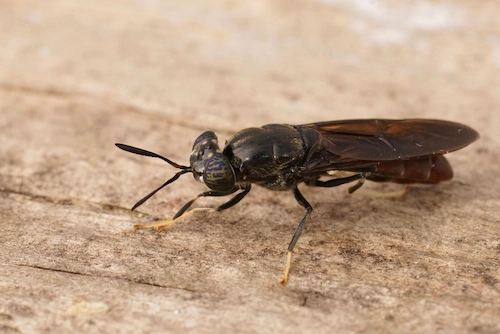
The Black Soldier Fly (BSF) is a fly species that decomposes organic waste and is widely used to help manage it. This fly is known for its ability to break down organic waste quickly, due to its larvae, known as maggots.
In its life cycle, the BSF goes through several stages, from egg to larva to pupa to adult fly. Of all these stages, the larval phase is the most critical. Why is that?
BSF larvae are the most active phase in the organic waste decomposition process. At this stage, BSF larvae can consume large quantities of various food scraps, fruits, and vegetables.
Unlike common houseflies, BSF do not carry diseases because they do not land on food or wet waste to reproduce.
BSF flies are commonly used to produce high-quality compost, alternative feed for livestock and fish, and for maggot farming. BSF maggots are the larvae of BSF flies and play a crucial role in organic waste decomposition.
Potential for BSF Development in Indonesia for Organic Waste Management
Indonesia has significant potential for developing Black Soldier Fly (BSF) farming as a solution for organic waste management. This is because the volume of organic waste in Indonesia remains high, with the majority originating from food waste.
According to data from the Ministry of Environment and Forestry’s National Waste Management Information System (SIPSN) for 2025, waste generation in Indonesia is still dominated by organic waste, or food scraps, which account for 40.76% of the total national waste.
This situation indicates that organic waste processing remains a major challenge in various regions. Therefore, the use of BSF is considered to have great potential to reduce waste volume in a more efficient and environmentally friendly manner.
Read also: What Is Composting? The Benefit and How to Make It at Home
Benefits of BSF
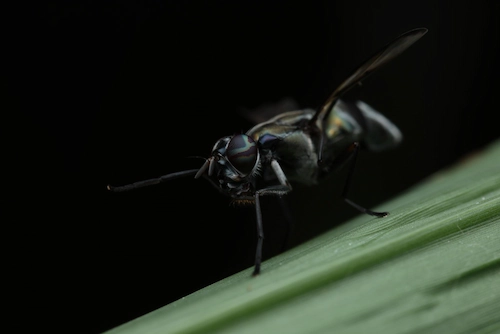
BSF can help support environmental management while providing economic value in the livestock and fisheries sectors. Here is an explanation of the BSF’s benefits:
Helps Reduce Organic Waste
As previously discussed, one of the main environmental benefits of BSF is its ability to break down organic waste more quickly.
BSF larvae or maggots can consume food scraps, fruits, and vegetables, thereby helping to reduce the accumulation of organic waste.
Research published in Jurnal PEDAMAS (2025) shows that BSF larvae can reduce organic waste by up to 70%. Additionally, this process produces valuable byproducts, including high-protein maggots for animal feed and frass that can be used as organic fertilizer.
Supporting Environmentally Friendly Waste Management
The use of BSF is considered more environmentally friendly because the waste decomposition process is natural and does not require additional chemicals. This makes the waste management process more efficient while reducing unpleasant odors and emissions caused by decomposing waste.
The use of BSF can help create a more sustainable waste management system by adopting the circular economy concept, in which organic waste is not merely discarded but processed into useful products.
A High-Nutrient Alternative Source of Animal Feed
Besides benefiting organic waste management, BSF maggots also have significant economic value. The high protein content in maggots makes them widely used as an alternative feed for fish, poultry, and livestock because they are considered nutritious and more cost-effective.
Read also: 8 Ways of Organic Waste Management, Easy and Eco-Friendly!
How BSF Breaks Down Organic Waste
BSFs break down organic waste through their larval stage, more commonly known as maggots. At this stage, the maggots consume various types of organic waste, including food scraps, fruits, vegetables, and kitchen waste, daily.
The decomposition process begins when BSF eggs hatch into small larvae. After that, the larvae actively consume the organic waste and convert it into useful biomass. It is this ability that makes BSF maggots frequently utilized to reduce the volume of organic waste more quickly and efficiently.
During this process, the organic waste transforms into material that is easier to decompose and produces minimal odor. The resulting byproduct of this decomposition can be reused as organic fertilizer, while the maggots can be used as feed for fish or livestock.
That concludes the explanation about BSF flies and their role in aiding waste decomposition. The use of BSF is a simple innovation that can make a significant impact on the environment by enabling faster, more sustainable waste decomposition.
To support more sustainable waste management, you can participate with Indonesia Asri. Together with Indonesia Asri, you have the opportunity to actively help protect and preserve the environment.
You can also share your stories or experiences in protecting the environment through the Jejak Asri campaign. Do not miss the chance to submit your inspiring work by October 16, 2026, and win prizes worth millions of rupiah.
Register now and join this movement to protect Indonesia’s environment together!
Read also: Waste Management System: Types, Stages, and Methods